Essay · Traditional Music
Juan Rodríguez Huerta: piper from Teverga and gaita maker
Fourth instalment of the series: Juan el de la Torre, piper from Teverga and gaita maker, who played through the war and the dictatorship.
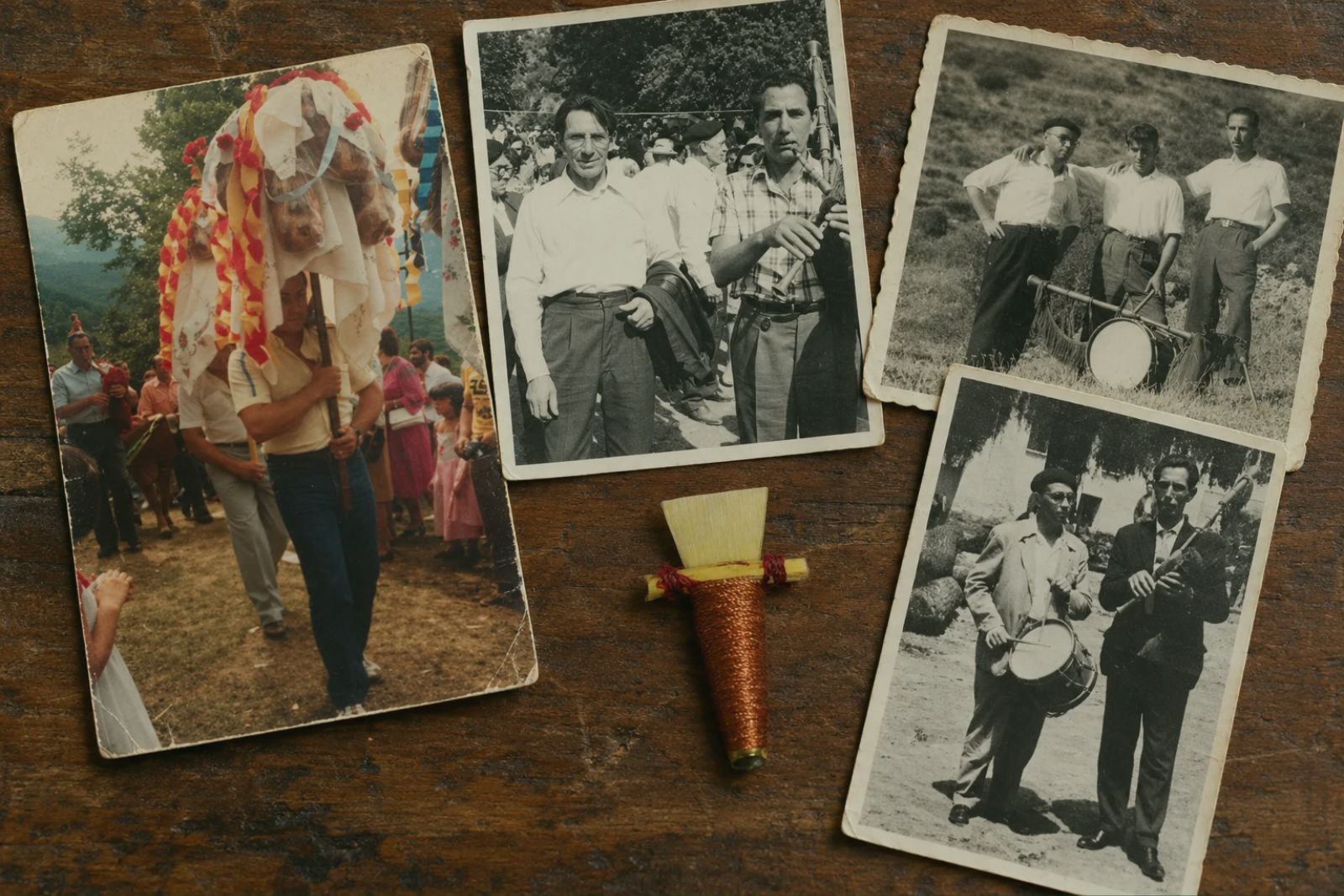
On 19 February 1995, the Teatro Campoamor in Oviedo was full. There was a gaita band, a folklore competition and, between one performance and the next, a tribute. A woman walked onto the stage, visibly moved, and the Gaiteru de Veriña —the protagonist of the previous instalment— handed her a gift. She was the daughter of a piper who had died fifteen months earlier: Juan Rodríguez Huerta, «Juan el de la Torre».
When the history of the Asturian gaita is told, the same names tend to appear: those who made records, won competitions or got into the books. But the gaita did not reach today only because of them. It was also sustained by lesser-known pipers who kept playing when it was not easy: in a war, under a dictatorship, during the rural exodus that emptied the villages. The Gaiteru de Veriña was one of them. Juan Huerta, another.
Very little has been written about Juan: a page in a book from 1996 and a newspaper report. The rest had to be sought out, and it is scattered across archive boxes, a cassette from 1976 and his family’s memory. I have been piecing it together as part of my research on the folk musicians of Proaza and Teverga, trudging through archives and sitting down to talk with those who knew him.
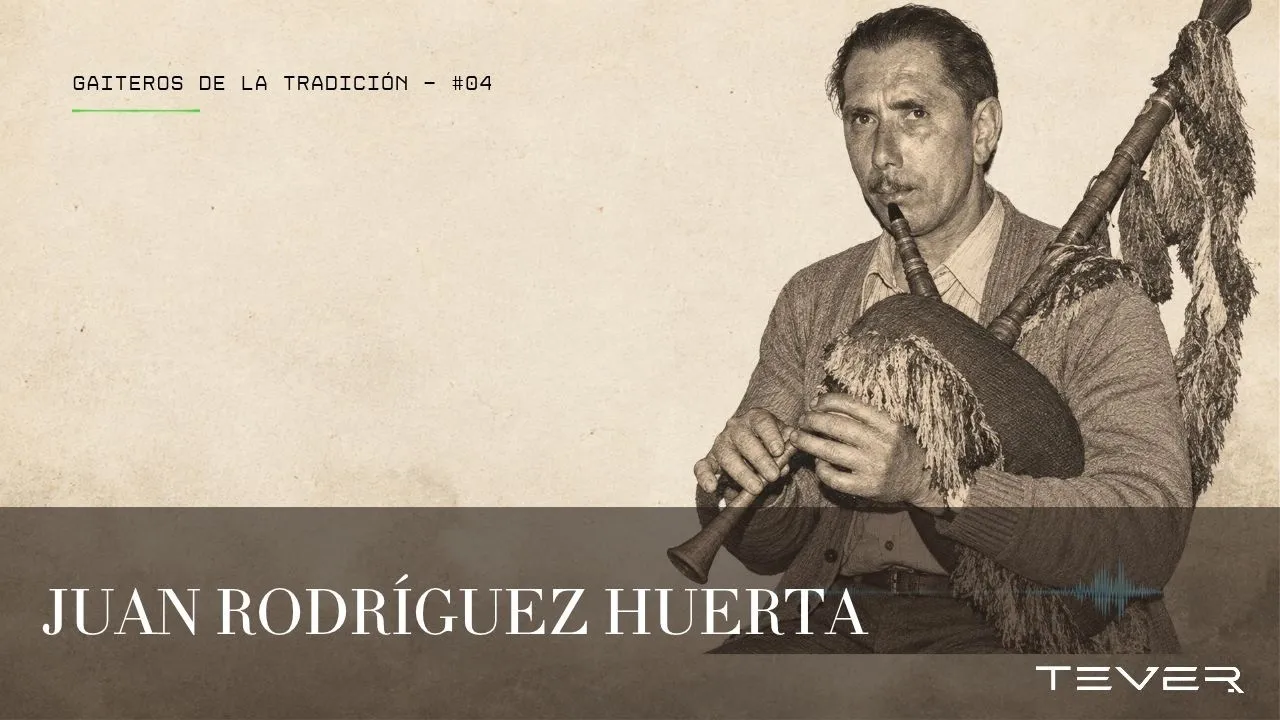
Juan Rodríguez Huerta was born on 10 October 1915 in La Torre (Teverga) and died on 22 November 1993, aged 78. In folk circles he was called «Juan el de la Torre» or, simply, Juan Huerta.
When he was about to turn eighteen, around 1933, he asked his brother-in-law Joselín Quiñones, a folk piper from Torce, to teach him to play the gaita, and he learned fast. The following year, an old piper who had had his right hand amputated and could no longer play gave him his gaita. Juan received it, the book says, «as a treasure». He practised for hours imitating the pipers of Teverga, and the «cuts of the melody» and the two requintos —the highest notes of the punteru— of the western school of Teverga pipers soon held no secrets for him.
Piper in the war and under the dictatorship
Because of his age, Juan had to go to the civil war. The gaita went with him, according to his family, although the 1996 book sums it up like this: «the time of military service arrives, in fact of the Spanish civil war. It is a parenthesis in his musical career». He is not the only piper whom the war forced to improvise: Norino’l gaiteru, from Sotrondio, said in 2008 that, posted to a labour battalion in Valencia, he made a gaita with what he had at hand: the chanter stock with a wooden funnel and the bag with a dog they had stolen from a battalion of Germans.
His family also remembers an episode in León. He was fighting on the Republican side and his sergeant handed them over to the nationalist army, so that, from that moment, he had to fire on the other side. It is a family memory, told by a third party, which I have not been able to check against documents. From that time Juan was left with the idea that the two sides were alike.
Once the war was over, Juan went on being a piper within the Franco dictatorship. His repertoire was very broad: jotas, muñeiras, the son d’arriba, processional melodies and, above all, the «Teverga gaita mass». He also played the fashionable tunes for the «baile agarrao» (close dancing), with bass drum, snare drum and cymbals.
He played at a visit by Franco to Oviedo. The 1996 book places it «at the start of the forties» and says the organisers looked for «the best of the pipers of those years»: his performance, in front of the old Santa Clara barracks, «was brilliant, and he was applauded to the echo». His family believes it was in 1946. For years he marched in the Día de América en Asturias and played for many years at the Oviedo festivities of Martes de Campo and La Balesquida.
When he went back to Teverga, the gaita kept sounding at home. He played in a place called El Fontán, accompanied by his sons on bass drum and cymbal.
That gaita was recorded as early as 1976. In April of that year, Celso Peyroux, writer and official chronicler of Teverga, recorded Juan on a cassette, and his sound archive describes him as «one of the great pipers Teverga had, alongside Julio de Fresnedo and Floro Regina. They played pa bailar a lo agarrao» (for close dancing). Two years later, in 1978, he was called to play his gaita mass at the church of San Juan el Real, in Oviedo, with the tenor Joaquín Pixán as singer.
What he did with his hands
His living did not come from music. He was a caretaker in Oviedo, at ERCOA, an Asturian electricity company founded in 1904 as Electricista de Langreo. But between one task and another of his job, he finished payuelas.
The payuela is the reed of the gaita, a tiny piece on which the sound of the whole punteru, the melody pipe, depends. Finishing it, sanding it until it is just right for the piper, takes patience and a skilled hand. It is the craft I talk about in «The payuela, the soul of the Asturian gaita», and Juan did it with care, both in his workshop and at work. And not only payuelas. According to the 1996 book, he also built gaitas: he did not sell them, he made them for his friends. His tanned-leather bags were in great demand, his punteros were prized «for their perfect tuning and most agreeable timbre», and of payuelas he made «by the dozen». He repaired the gaitas that passed through his hands —bags, blowpipes— and sewed the vestidos, the cloth cover that wraps the fol, the instrument’s air bag.
That knowledge attracted other pipers. Important people of the Asturian gaita passed through Juan’s house: Xuacu Amieva and Alberto Fernández, who wanted to know how he made payuelas and how he kept gaitas in order, and the Pravianu and Manolo Quirós, whom he taught. He also scolded Quirós for keeping the beat with his foot.
According to the book, there were years when he gave up the gaita; nostalgia brought him back and he taught young people, among them Rogelio, «the gaiterín of Quintanal», and Quirós himself, who would end up in the group of pipers of the Centro Asturiano de Madrid. When he taught, he let students play only the punteru, without the full gaita: they worked on their fingers first and left the bag for later. His last tamboritero, the musician who accompanied him on the drum, the traditional partner of the gaita, was Manolo Brañes.
Tribute at the Campoamor
Let us go back to that Sunday in 1995. The tribute took place within the III Concurso y muestra de folklore «Ciudad de Oviedo», and La Nueva España reported it the next day: «the great Teverga piper Juan Rodríguez Huerta», «a notable performer who was, besides, an exceptional gaita maker». Besides the Gaiteru de Veriña, Celso Peyroux joined in, the same man who had recorded him in 1976, and read a poetic portrait of him.
His daughter summed it up in one sentence: «He was a great lover of the gaita, of folklore». His speciality, she said, was the gaita masses, and «they moved him deeply».
His daughter was not exaggerating. The 1996 book says that in church he «fervently performed one of the traditional and famous gaita masses of Teverga» and that he managed to «convey a deep emotion to everyone».
That speciality can be heard on that 1976 tape: 19 seconds of a floréu d’entamu, the flourish that opens an entemediu, the short piece played in the pauses of the mass. Half a century later I fed it to an algorithm to see what it would find.
A piper who fought in a war, played under a dictatorship and made his own payuelas and gaitas: that is how a tradition is kept going when nobody writes it down. And without people like Juan, today there would be nothing to tell. As the 1996 book put it: «one of the best pipers of Asturias and the best performer of the legendary gaita masses».
Video transcript
A tribute at the Campoamor
The series «Gaiteros de la Tradición» arrives at Juan Rodríguez Huerta, born in Teverga in 1915 and known as «Juan el de la Torre». The video tells his story from three angles: the piper who sustained the tradition in the hardest moments, the craftsman who made instruments and the teacher who passed on the torch. It starts at the end: on 19 February 1995, at the Teatro Campoamor in Oviedo, during the III Concurso y muestra de folklore «Ciudad de Oviedo», the competition pauses for a posthumous tribute. A woman walks onto the stage, moved, and the Gaiteru de Veriña hands her a gift. She is the daughter of a piper who died fifteen months earlier.
The piper and the gaita mass
Juan learned to play at 18, in La Torre, with his brother-in-law Joselín Quiñones, a piper from Torce, and he learned very fast. A year later, an old piper who was missing his right hand gave him his gaita. That is how he absorbed the western school of Teverga pipers: the cuts of the melody and the two requintos, the technique for reaching the highest notes of the punteru. His speciality was the gaita mass, a Eucharist sung in Latin and accompanied with the gaita de fuelle, the Asturian bagpipe, a Bien de Interés Cultural since 2014. Within it, the entemedios stand out, the pieces in which the singing falls silent and only the gaita sounds. In 1978 he was called to play it at the church of San Juan el Real, in Oviedo, with the tenor Joaquín Pixán.
Piper in the war and the dictatorship
With military service came, in practice, the civil war. The sources describe it as a parenthesis in his musical career. Little is documented, but his family remembers an episode in León: while they were lined up in a square, a superior switched his group to the other side. At the start of the forties —in 1946, according to his family— there was an official visit by Franco to Oviedo, and a piper was requested for the reception in front of the old Santa Clara barracks: Juan played.
Between festivities and peñas
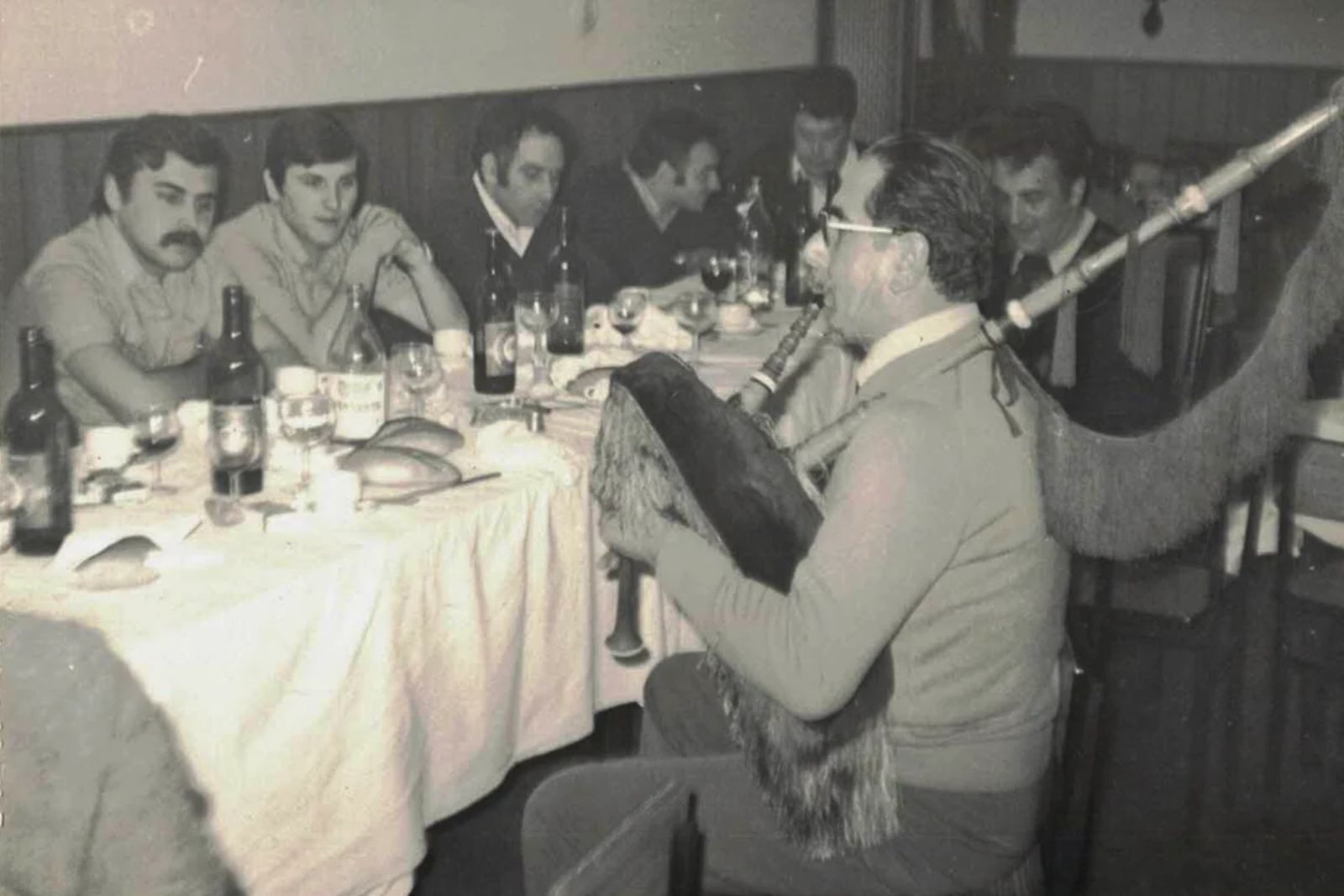
After the war he did not put the gaita away: he went on playing at romerías, dances, processions and masses, and so kept the repertoires of Teverga alive. When he went up to Teverga he played in Torce, at El Fontán, with his sons on bass drum and cymbal. In Oviedo he played for many years at Martes de Campo and La Balesquida and marched for several years in the Día de América en Asturias. He was the doyen of the Peña de los Quince, a group of pipers and drummers who got together to eat, to dine and to play, and whose meals were promoted by the Marqués de Proaza, Camilo Álvarez.
The gaita maker
He worked as a caretaker and, among the tasks of his job, made parts of the instrument: the punteru, the bag and the payuelas, the small cane reeds from which the sound is born. He built gaitas of several kinds according to the sound sought: the grillera, higher and more roguish, for dancing; the redonda, sturdier and more nostalgic; and the tumbal, lower, intended for the solemnity of the liturgy. He did not sell them: he made them for his friends. In 1995 La Nueva España called him an «exceptional gaita maker».
Passing on the craft
He taught his brother-in-law Ito, Rogelio, «the gaiterín of Quintanal», and Manolo Quirós; these last two ended up at the Centro Asturiano de Madrid. The Pravianu and Alberto Fernández, who wanted to find out how he made payuelas, also passed through his house. Of Quirós it is said that Juan scolded him for keeping the beat with his foot. As a teacher he was strict: the student could not hang the full gaita on himself at first, he only played the punteru, to master the fingering before anything else.
How he sounded and legacy
All that is left of Juan is the audio of 19 seconds of a floréu d’entamu, the opening flourish of a gaita-mass entemediu, recorded on cassette by Celso Peyroux in 1976. The catalogue entry of the archive that keeps it counts him among the great pipers of Teverga. The video returns to the Campoamor of 1995: alongside the Gaiteru de Veriña was Celso Peyroux, who read a poetic portrait of him, and his daughter summed up his life: «he was a great lover of the gaita, of folklore». The close poses a question: how much of our cultural history rests on these silent guardians who, without seeking the spotlight, protected the tradition.
Bibliography
- Fieldwork and archival research carried out by Tever on the folk musicians of Proaza and Teverga: interviews with the family of Juan Rodríguez Huerta.
- «Espectáculo y concursantes de calidad en la primera semifinal», L. M. Arce, La Nueva España, 20 February 1995, p. 75 (report on the tribute).
- Interviews with the family of Juan Rodríguez Huerta (family memories of the civil war, unchecked against documents, and of Franco’s visit to Oviedo, partly checked against the 1996 book).
- Marcilla, José María (1996). Concurso y muestra de folklore «Ciudad de Oviedo». Un hito en la historia de la cultura asturiana. Oviedo: Ayuntamiento de Oviedo, p. 164 («Juan, “el de la Torre”»).
- «El Pueblu d’Asturies suma a su colección de música un disco de “Norino’l gaiteru”», Marcos León, La Nueva España, 12 December 2008: lne.es.
- Archivo Sonoro de Celso Peyroux, cassette no. 1 (April 1976, Oviedo): Juan Huerta, «Entemediu en 3/8».
- «De Electricista de Langreo a ERCOA», Electrogás.org, 6 January 2021: electrogas.org.