Essay · Musical Learning
The Bear Dance: it sounds medieval, but it arrived forty years ago
The Bear Dance sounds like old music, almost medieval, but it is neither Asturian by origin nor old: it reached Asturies in 1984. The datable story of how a Central European polka became ours, and why it is the tune that beginners on the gaita enjoy most.
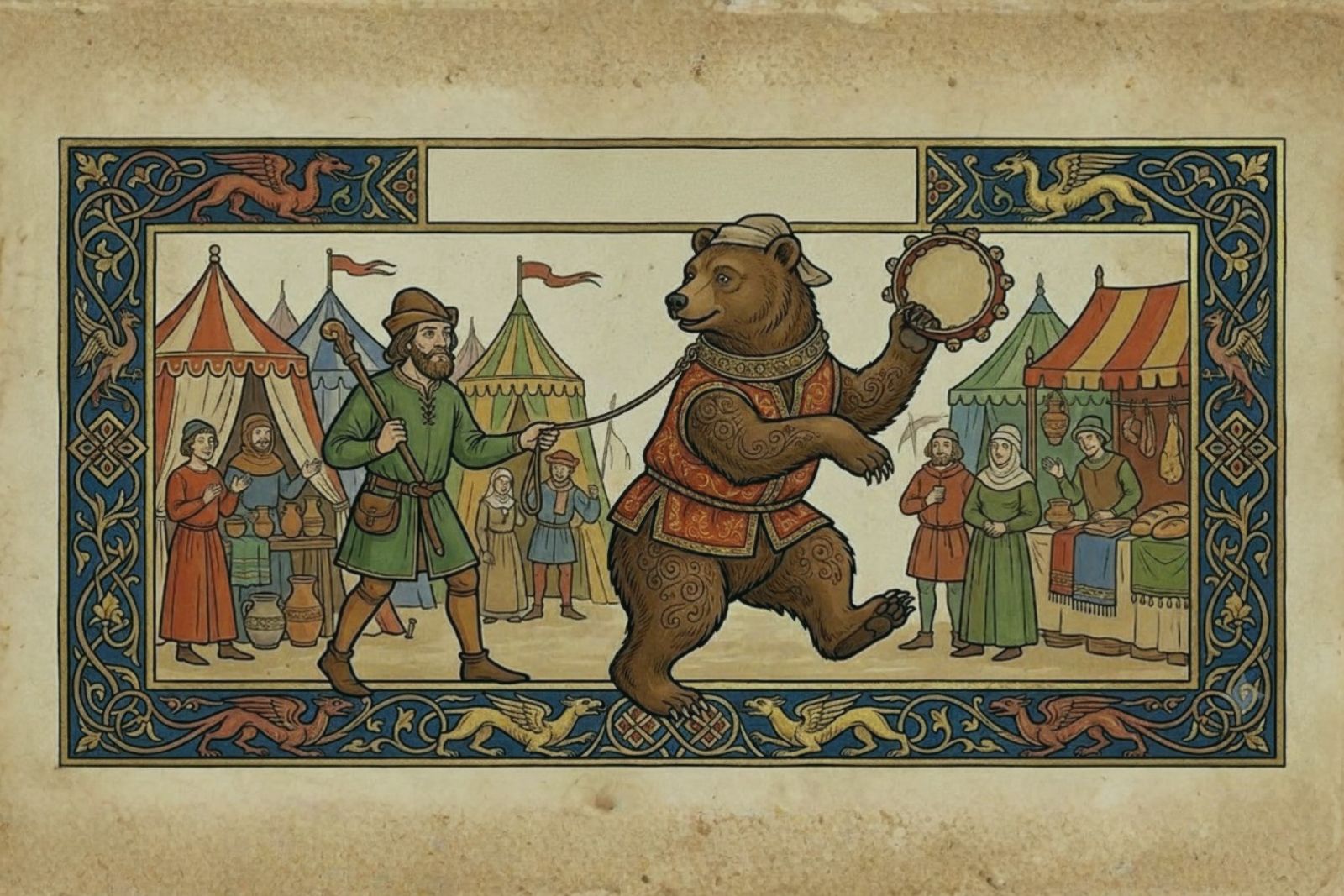
The Bear Dance —in Asturian, «Danza l’Osu»— is one of the best-loved melodies of the Asturian gaita, and almost always one of the first that a beginner learns. It sounds like music from another time, with an old, almost medieval air. But it is neither medieval nor Asturian by origin: it is a Central European dance melody that reached Asturies forty years ago, in 1984. And that is the best part of its story.
I teach it and I play it, and I see the same thing every time: a beginner’s face lights up on getting it out, because it sounds «like something» from the very first day. For those of us who have been at it for years, on the other hand, our ear has grown a little tired of it from so much playing. Both things are true, and both say something about this tune.
Where it really comes from
The Bear Dance was not born in Asturies. The melody is thought to be Flemish in origin —from Belgium—, where it is known as «Berendans» (literally, «bear dance»); you can hear a Flemish version on the diatonic accordion. It is a polka: a dance tune of lively metre. And, like so many melodies of European folk, it travels from country to country changing its name: in traditional-music repertoires it appears as Berendans, Dance of the Bears, Danse de l’ours or Polka d’Ours, among others. That collection of names is, in itself, the trace of how far it has rolled.
It spread through the European folk circuit of the nineteen-seventies —France, the Pyrenees, Catalonia, Asturies…—: it is one of those melodies that stick in the ear and take root wherever they pass. It reached Asturies by way of Atlantic folk. By origin it has nothing to do with the Asturian gaita or with the Middle Ages.
When it became ours: 1984
The lovely thing is that we can put a date to it. The Bear Dance reached Asturies in 1984, brought by the Cornish group Ragamuffin, who played it in Oviedo on one of those early folk nights. It was so well liked that it passed at once into the repertoire of the pipers here and stayed: today it is never missing from a romería or a session. It was rechristened «Danza l’Osu», and in time many came to take it for Asturian through and through.
The decisive push came from Xuacu Amieva —one of the key names in the recovery of Asturian traditional music, from the group Ubiña— when he recorded it on his first album, «Onde l’agua ñaz» (1986), a work that marked a before and after for the gaita. Some point to it as, probably, the first «hit tune» of the folk world. You can listen to Xuacu Amieva’s recording on YouTube.
Why it hooks beginners
Here is the other reason for its fame. The Bear Dance is what we usually call maximum return for minimum effort: it sounds far more than it costs to play.
- Technically it is simple: it needs no requintu —no need to climb into the high register or force the blow—, it moves through the comfortable part of the punteru and it has a repetitive structure, easy to memorise. All within the natural register, without reaching for the requintu (the highest notes of the Asturian gaita).
- And yet, it sounds «old». The secret is in the mode. It does not run in the major mode —the «cheerful» one of radio songs—, but in the Dorian mode, one of the modal scales (like the Ionian, the Phrygian or the Mixolydian) that give that colour we associate with medieval music and the «Celtic» imagination.
That is the magic for a beginner: with little technique, from almost the first day, you get out a melody that carries you away. It is no accident that it hooks people.
What it teaches about tradition
The Bear Dance is, at bottom, a small lesson in how living tradition works. A polka from the Low Countries comes in through the door of Atlantic folk —the same arc that joins the Asturian gaita with Scotland, Ireland and Brittany—, is liked, is played, is rechristened and, forty years later, is «ours».
Tradition is not a museum: it is what goes on being played, and sometimes what is adopted and made one’s own. Knowing that the Bear Dance came from outside takes nothing away from it; it tells a better story. And for someone starting out on the gaita, it remains what it always was: the first time your instrument sounds of another age.
Bibliography
- Amieva, Xuacu. Onde l’agua ñaz. Sociedad Fonográfica Asturiana, 1986. The recording that fixes the «Danza l’Osu» in the modern repertoire of the Asturian gaita.
- Álvarez Peña, Alberto. «La Danza’l Osu». Anuariu de la Música Asturiana, Ediciones Ámbitu, 2007. Origin and arrival of the tune in Asturies.
- The Session, «The Bear Dance (polka)». A traditional-music database: documents its polka form and its Flemish origin.
- North Atlantic Tune List, «Baerendans / Baerentanz». Collects the names of the melody and its Flemish origin (Belgium).
Frequently asked questions
-
Is the Bear Dance Asturian?
Not by origin. The Bear Dance («Berendans» in Flemish) is a polka thought to be Flemish in origin (Belgium) and played across Europe under different names. It reached Asturies in 1984, brought by the Cornish group Ragamuffin, and caught on so fast —above all after Xuacu Amieva recorded it on «Onde l’agua ñaz» (1986)— that many take it for Asturian through and through. It was rechristened «Danza l’Osu» and today it is part of the living repertoire of the Asturian gaita: adopted, not inherited.
-
Is the Bear Dance a medieval song?
No. What makes it sound old is not its age, but its mode: it is in the Dorian mode, one of the modal scales we associate with medieval music and the «Celtic» imagination. But the piece itself is a dance polka thought to be Flemish in origin (Belgium) that became popular in Asturies from 1984 on. It sounds of another age; it is not from another age.
-
Why is the Bear Dance good for starting out on the gaita?
Because it gives maximum return for minimum effort. Technically it is simple: it needs no requintu —no need to climb into the high register or force the blow—, it moves through the comfortable part of the punteru and it has a repetitive structure, easy to memorise. And yet, its Dorian mode gives it an «old» colour that makes it sound far more than it costs to play. With little technique, from almost the first day, the student gets out a melody that hooks —and that is why it is one of the great rites of passage when starting out on the Asturian gaita.