Essay · Traditional Music
The Gaiteru de Veriña: the accompanist of the great Asturian tonada
Third instalment in the series on the pipers of tradition: the Gaiteru de Veriña, accompanist of the great tonada voices from the age of 15, and one of the few pipers who kept playing through the rural exodus of the 1960s.
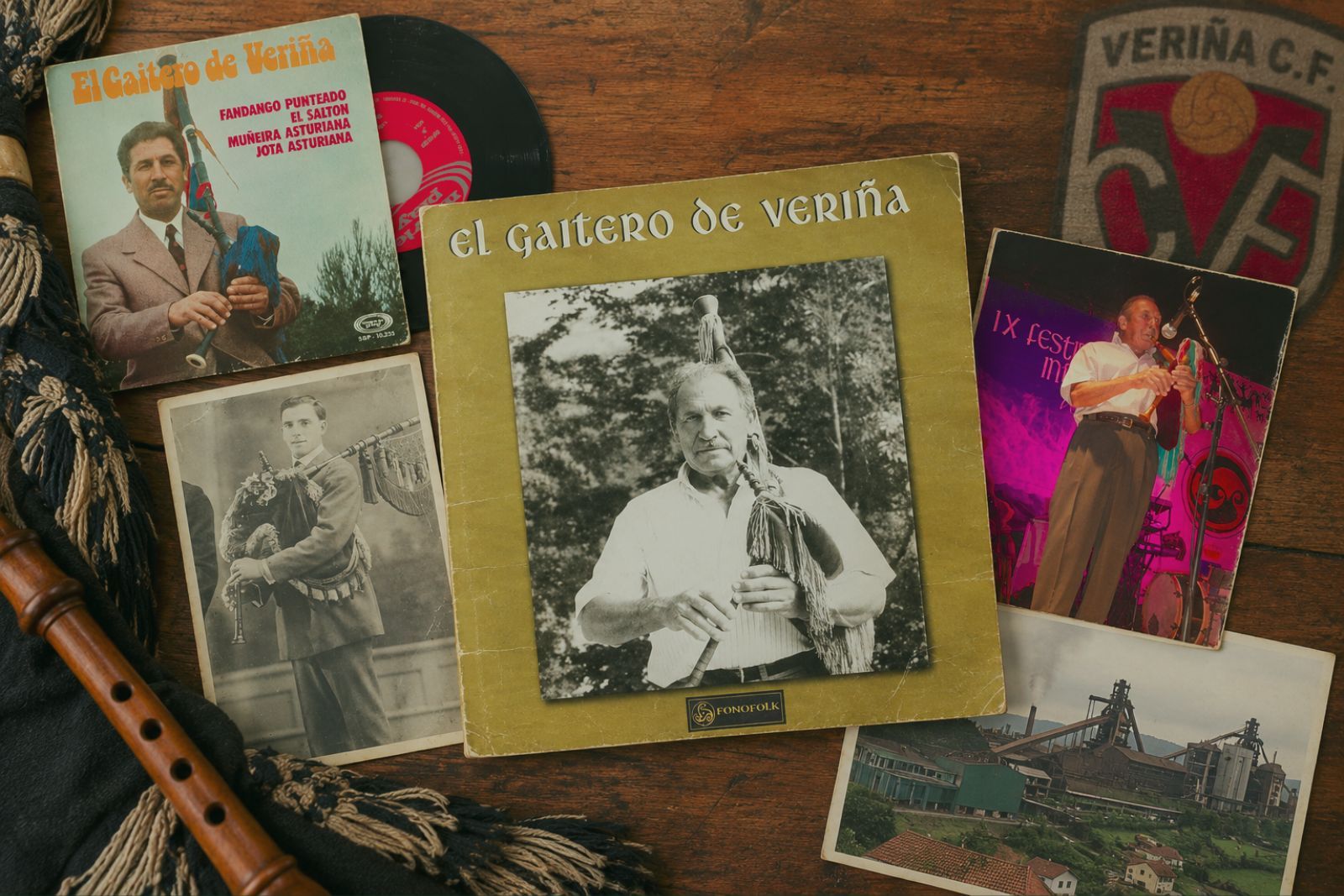
I continue the series on the pipers of tradition with José Antonio García Suárez, el Gaiteru de Veriña (1928-2006), the reference accompanist of the great Asturian tonada for decades. In the first instalment I told the story of the Gaiteru Llibardón, who recorded the first Asturian gaita record in history; in the second, of José Remis Ovalle, double Gaitero Mayor de Asturias. The Gaiteru de Veriña has a different profile within the same series: not the one who broke international borders, but the one who, at home, kept playing and accompanying for decades.
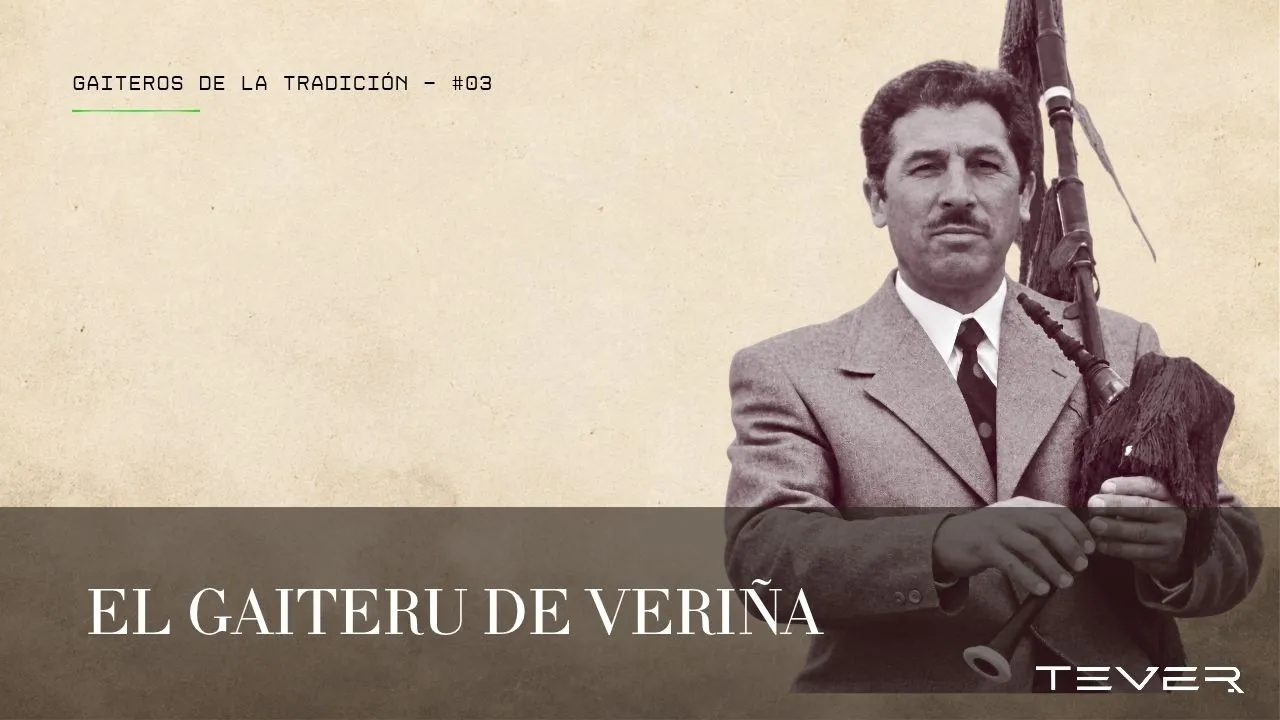
Who the Gaiteru de Veriña was
He was born on 16 June 1928 in Poago —Puao in normative Asturian— (Gijón), son of the piper Ramón d’Antón. He started playing as a boy while tending cattle, with an old punteru his father lent him. He made his debut at 14 performing the Misa de gaita —the gaita as part of the liturgy itself, not just the festivity— at the festivities of Santiago de Pruvia, and at just 15 he accompanied Obdulia Álvarez, «La Busdonga», one of the leading figures of the tonada —traditional Asturian song— of her time, at a romería.
Why «de Veriña» if he was born in Poago
The stage name does not match his birthplace. Poago sits in a high area, uphill; Veriña, by contrast, was where the train stopped. The tonada singers who picked him up to take him to the romerías arranged to meet him at that station, so they wouldn’t have to climb up to his house with their voice already tired from hours on the road. He always set the meeting point at Veriña, and the name of that parish stuck with him forever. A small detail that says a lot about how he understood his own craft: before the instrumentalist, there was the companion.
The accompanist everyone wanted
For decades he was the reference accompanist for the great voices of the Asturian tonada: José Noriega, Diamantina, Agustín Argüelles, Marcelino Meré «El Manquín» and Vicente Díaz, among others, relied on him. Between 1970 and 1977 he was part of the group «Así canta Asturias», taking traditional Asturian music to festivals in Spain and Belgium.
Still playing through the years of the rural exodus
In the 1960s, the rural exodus completely changed life in the Asturian countryside, and with it the context in which traditional instruments lived, the gaita included. He, along with two or three other pipers of his generation, kept playing and teaching through that period, without giving up his weekday job at Ensidesa —where he worked until retirement— and travelling to romerías at weekends. In his later years he recorded, alongside Pedro Pangua and Mari Luz Cristóbal, the Asturian gaita mass: the same piece he had made his debut with decades earlier.
Recognition, in his lifetime
He was honoured at the Teatro Campoamor in Oviedo in 1992. He died on 25 September 2006 in Villaverde de la Marina (Villaviciosa), aged 78.
The first two instalments of this series tell of pipers who took the Asturian gaita far —to world’s fairs, on tours across two continents. The Gaiteru de Veriña is a different profile within the same series: that of the piper who, at home, accompanied the great tonada voices for decades and kept playing through a period when rural Asturian life was changing fast. I myself play that same tradition today, resting on the work of people like him.
Video transcript
The boy from Poago
José Antonio García Suárez was born on 16 June 1928 in Poago (Gijón). His father, Ramón d’Antón, and one of his uncles were already respected pipers in the area, so he grew up surrounded by traditional music from the cradle. By age 9 he already showed a total obsession with the gaita, practising with an old punteru of his father’s while tending cattle in the meadow. In 1942, at 14, he made his professional debut performing a full gaita mass at the festivities of Santiago de Pruvia.
Why «Veriña» and not Poago
His stage name does not match his birthplace. Poago sits in a high area, uphill; Veriña was the point where the train passed through, the station where the tonada singers picked him up to take him to the romerías. So they wouldn’t have to climb up to his house after hours on the road, he always arranged to meet at Veriña —and the name of that parish stuck with him forever. His true master, whom he always credited, was David Alonso, «the second Llibardón of Llanera».
Accompanying the greats of the tonada
For decades he was the undisputed choice as accompanist for the great voices of the Asturian tonada: José Noriega, Diamantina, Vicente Díaz, Mari Luz Cristóbal Caunedo. His first major performance as an accompanist was with Obdulia Álvarez, «La Busdonga», then the number-one voice of the tonada —he was just 15. He formed a legendary duo with the drummer Luis de Sarilles, with whom he popularised pieces such as the alborada asturiana, the fandango puntiao, the diana floreada and the saltón.
Still playing through the years of the rural exodus
During the rural exodus of the 1960s, life in the Asturian countryside changed fast. Alongside two or three other pipers, he kept playing while working at Ensidesa during the week, and at romerías on weekends.
An indelible legacy
He died on 25 September 2006, aged 78, after a heart attack. Among his last recordings is the Asturian gaita mass, alongside Pedro Pangua and Mari Luz Cristóbal —the same piece he had made his debut with decades earlier. He was honoured at the Teatro Campoamor in Oviedo (1992). His granddaughter carries on his musical legacy today.
Bibliography
- «El Gaiteru de Veriña», Wikipedia n’asturianu: ast.wikipedia.org/wiki/El_Gaiteru_de_Veriña. Main source for biographical data (birth in Puao, collaborations, the «Así canta Asturias» group, last recording).
- «El Gaiteru de Veriña», Asturianos Ilustres: ilustresasturianos.blogspot.com. Source for the 1992 tribute at the Teatro Campoamor and his employment at Ensidesa.
- «El Gaiteru de Veriña», La Esquina Rota: platonlj.blogspot.com. Source for the story of the stage name’s origin (the Veriña train station) and the period of the rural exodus of the 1960s.