Guide · Traditional Music
What is the Asturian gaita? A guide for the curious
What the Asturian gaita is, what parts it is made of, what keys it is tuned in and what repertoire it serves. A clear guide for anyone starting from scratch.
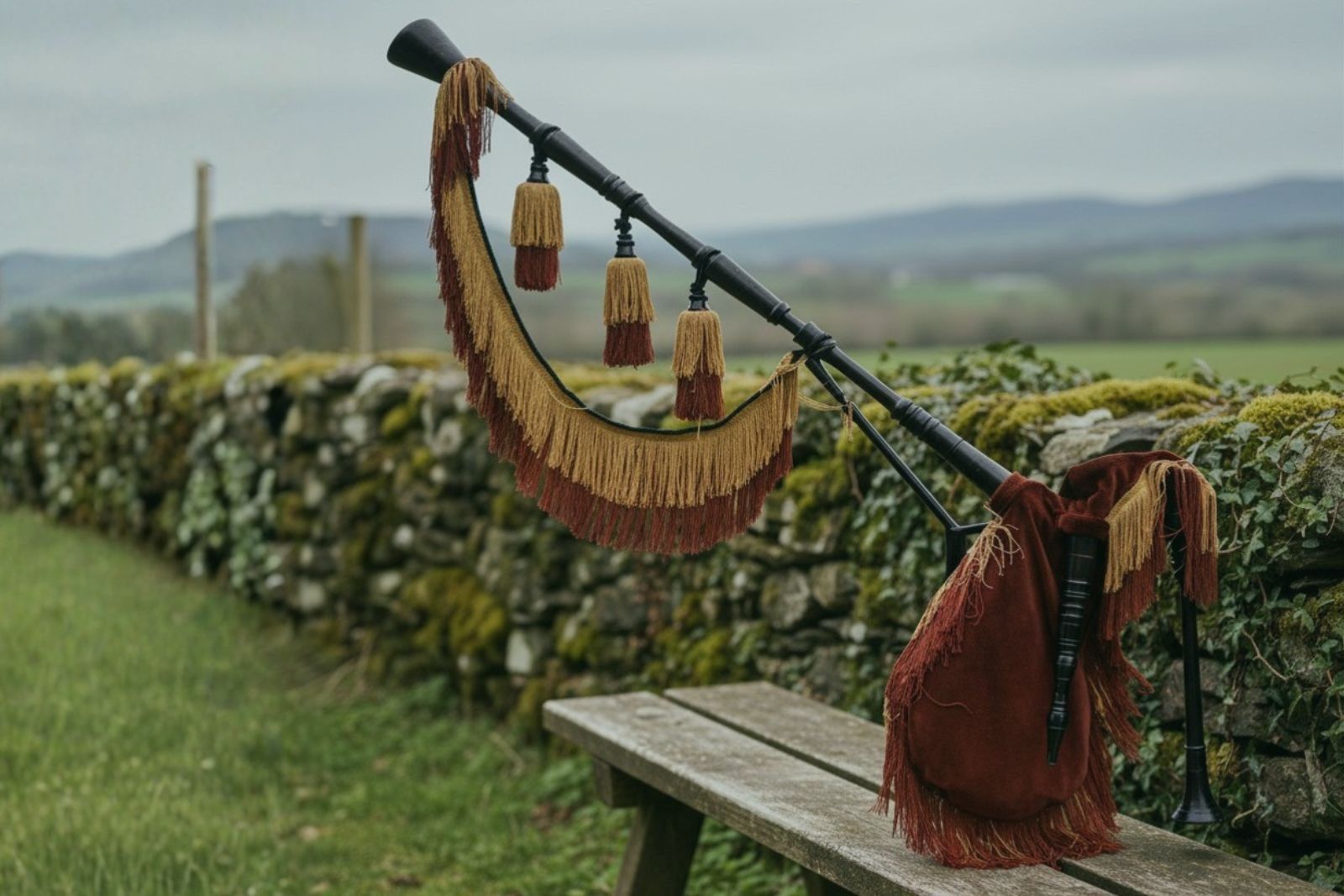
The Asturian gaita is the most representative bagpipe of the traditional music of Asturies: a bag-and-reed aerophone with four parts —soplete, fol, punteru and roncón— that holds a continuous sound while it plays. If you have heard of it and don’t know where to begin, this guide gives you the basics without detours.
I play it every day, so I’ll tell you about it the way I’d tell someone seeing it for the first time: what it is, how it’s built, how it sounds and what it’s for.
Which family it belongs to
The Asturian gaita is a bagpipe with a bag (gaita de fuelle). It belongs to the great European family of bagpipes, the same one that includes the Galician gaita, the Scottish and the Irish uilleann pipes. They share the mechanical principle —a reservoir of air that feeds the reeds— but each has its own tuning, repertoire and technique.
Being related doesn’t mean they’re interchangeable. The Asturian gaita has a sound identity that anyone who knows it can recognise, and it belongs to Asturian traditional music, not to a generic “Celtic sound”. That’s why outside Asturies I call it gaita, not bagpipe or cornemuse: I explain why in gaita, bagpipe, cornemuse: what to call it in each language.
What parts it is made of
The Asturian gaita has four components, each with a specific job:
| Part | What it is | Function |
|---|---|---|
| Soplete | The pipe you blow air through | The system’s intake |
| Fol (bag) | The air reservoir | Keeps the sound going without breaks as you squeeze it with your arm while breathing |
| Punteru | The melodic pipe, with finger holes | Where the music is made: the hand opens and closes holes to draw out the melody |
| Roncón | The drone pipe | Produces the low, continuous note that accompanies everything the punteru plays |
Understanding these four parts explains almost everything you hear: melody (punteru) over a fixed drone (roncón), fed by air that never stops (fol and soplete).
What keys it is tuned in
There isn’t a single Asturian gaita: there are gaitas in different keys. The most widespread are B flat, C and D.
The key is no small detail. It changes the timbre of the instrument and shapes which pieces and which other instruments or voices it sits best with. A gaita in B flat and one in D sound like related but distinct instruments, and a gaitero usually chooses according to what they’re going to play and with whom.
What it’s used for: the repertoire
The Asturian gaita is tied to the repertoire of the traditional music of Asturies. Some kinds of piece you’ll come across:
- Alboradas. Daybreak pieces, linked to the opening of festivities.
- Processional marches. The ceremonial repertoire, bound to romerías and solemn occasions.
- Xirandillas. Dance pieces, lively and with a marked beat.
- Muiñeiras. A dance with roots shared across the north-west of the peninsula, also present in the Asturian repertoire.
Alongside these there’s a wide festive and ceremonial songbook. It isn’t a closed repertoire: it’s still played live, recorded and composed from the root. The Asturian gaita is a living instrument, not a museum piece. That vitality has a concrete technical basis: the transition to equal temperament, driven by Alberto Fernández Velasco in the 1980s and 90s, which made gaita bands and integration with other instruments possible.
What to listen to first
If you want to move from theory to the ear, find an alborada and a xirandilla back to back: the first shows you the slow, ceremonial side; the second, the dance side. Between them you have the two extremes of the instrument’s character.
And when you listen, pay attention to the drone. Once you can pick out the continuous hum of the roncón beneath the melody of the punteru, you’re already hearing the Asturian gaita the way a gaitero hears it.
If you also want to know who sustains this instrument today —conservatory, schools, bands—, here is the current panorama of the Asturian gaita.
Bibliography
- Fernández Velasco, Alberto. La gaita asturiana: historia, técnica y repertorio. Caja de Ahorros de Asturias, 1991. The canonical description of the instrument, its parts and its history.
- Baines, Anthony. Bagpipes. Oxford: Pitt Rivers Museum, 1960. To place the Asturian gaita in the context of European bag-and-reed pipes.
Frequently asked questions
-
Is the Asturian gaita the same as a bagpipe?
It belongs to the same family — the European bag-drone instruments — but it’s not the same thing.
Bagpipe is the generic English term for any bellows-driven aerophone. In the Anglophone imagination, it almost always evokes the Scottish Great Highland Bagpipe: three drones, outdoor volume, plaid. The gaita asturiana has its own tuning, its own repertoire, and its own technique. One roncón. Smaller. Different sound.
That’s why outside Asturias it’s called gaita, not bagpipe: the name is part of the instrument. Using the generic term dissolves it into a category where the first thing that comes to mind is something else entirely.
I explain what the gaita asturiana actually is in What is the Asturian gaita?.
-
What parts make up an Asturian gaita?
The Asturian gaita has four components: the soplete (the tube through which air is blown in), the fol (the bag, the air reservoir that keeps the sound continuous while you breathe), the punteru (the melodic tube with finger holes where the melody is played) and the roncón (the drone tube that produces a single low, continuous tone). Understanding these four pieces explains almost everything you hear: melody over drone, with air that never cuts off.
-
What is the roncón of the Asturian gaita?
The roncón is the drone tube of the gaita asturiana: it produces a single low continuous note that accompanies everything the punteru plays. It’s that characteristic background hum that gives the gaita its unmistakable character.
It’s not an ornamental note: it’s the harmonic foundation on which the entire melody is built. The punteru moves through scales and phrases; the roncón holds the ground below it, steady and unbroken.
Once you learn to hear it separately — the continuous hum underneath the melody — you start listening to the gaita the way a gaitero does. The two voices (melody and drone) are always present, and the relationship between them is what creates the gaita’s sound.
I explain the instrument’s structure in detail in What is the Asturian gaita?.