Essay · Traditional Music
José Remis Ovalle: the double Gaitero Mayor of Asturias and Spain
Second instalment in the series on the pipers of tradition: José Remis Ovalle, son of a piper, double Gaitero Mayor de Asturias and the first Gaitero Mayor de España, whose three-year American tour and whose Floréu de Remis still mark the Asturian gaita repertoire today.
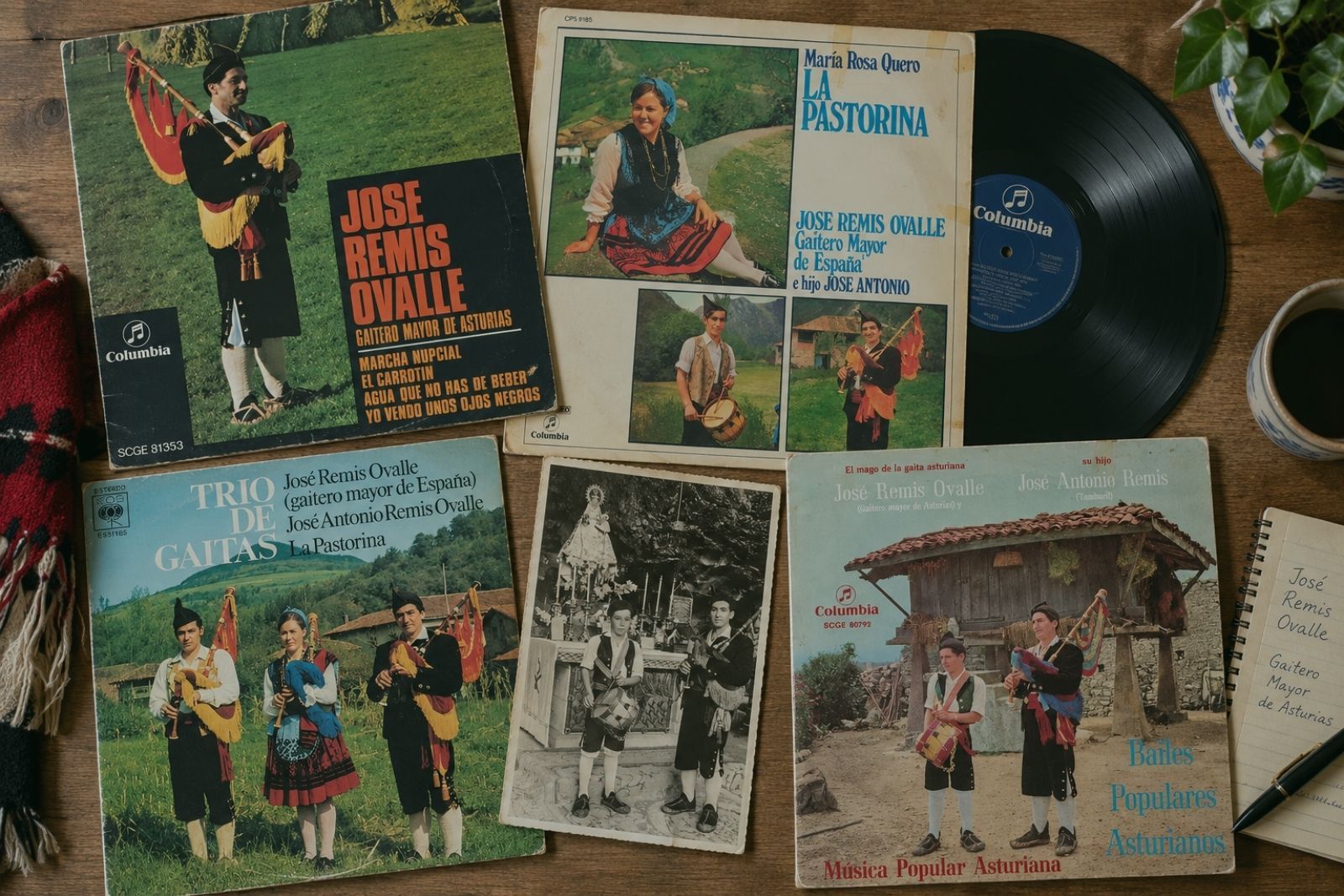
I continue the series on the pipers of tradition —those from before the Transición, the ones who built the road with no one ahead of them to clear the way. In the first instalment I told the story of the Gaiteru Llibardón, who recorded the first Asturian gaita record in history. This second piece has a real thread back to the first one: José Remis Ovalle was the son of José Remis Vega, «el Gaiteru de Margolles» —the same piper the Royal Household chose as the king’s official piper over the Gaiteru Llibardón himself. The son of the man who won that post would go even further than his father.
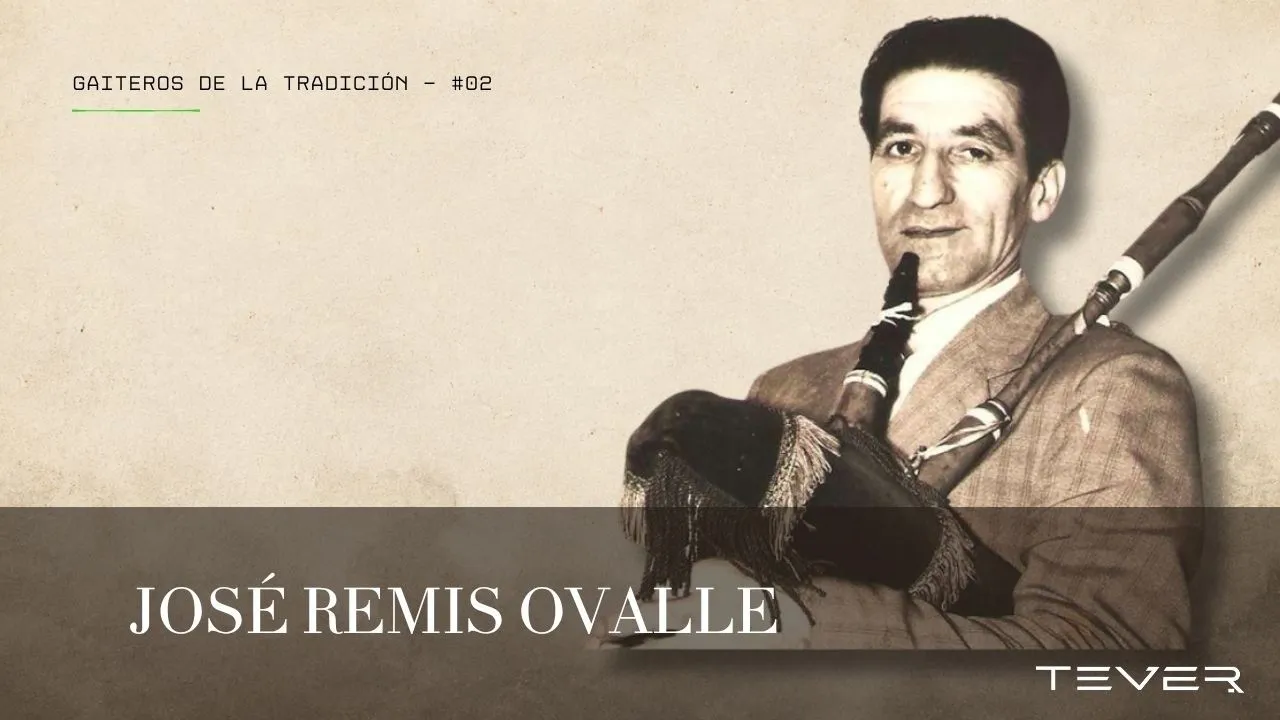
Who José Remis Ovalle was
He was born on 2 January 1910 in Margolles (Cangas de Onís). He started on the drum with his father from the age of 7-8, playing at local festivities, and learned the gaita with him from age 12. He later studied music theory with a teacher in Cangas de Onís —formal training unusual at the time for a village piper.
In 1956 he won the title of Gaitero Mayor de Asturias in Gijón, competing against 25 other pipers. His father came second in that same contest: the son surpassed the father on the very ground where the father was already the reference.
The tour that took him through 14 countries
Between 1957 and 1960 he made an American tour of more than 14 countries and nearly 70,000 km: Patagonia, Chile, Peru, Mexico, Argentina, Colombia, Panama, and several cities in the United States —Hollywood, Chicago, Washington, Miami. In Tampa (Florida) he was reunited with a sister. He came to share the bill with artists such as Sarita Montiel.
In 1959 he recorded his first record in Buenos Aires, with 12 pieces.
Double Gaitero Mayor and the Floréu de Remis
In 1970 he revalidated the title of Gaitero Mayor de Asturias, and on 22 August that same year he won the title of Gaitero Mayor de España —playing the Muiñeira de Chantada on a Galician gaita, not his own.
From his repertoire comes the Floréu de Remis, described as the most difficult piece to perform on the Asturian gaita, and today a standard part of the repertoire of any piper trained in the tradition. It is, in fact, the piece that led me to request my own gaita in C sharp: I was looking to get closer to the brilliance of his recordings.
There’s also a real anecdote from 1963: during that year’s Fiestas de Asturias he played the gaita while riding his motorbike for several kilometres along the seafront promenade of Gijón, to the crowd’s enthusiasm.
The legacy, to this day
He received tributes from the Sociedad de Festejos de Colloto (1984), from the Teatro Colón (1987), and a special recognition from the Government of the Principality at the Teatro Campoamor in Oviedo on 22 March 1987, just days before his death. That same January he had received the special Urogallo award from the Centro Asturiano de Madrid. He died on 25 March 1987, in Tornín, at the age of 77.
The Memorial Remis Ovalle, created that same year, is still a real competition today: its first 4 winners represent Asturias at the MacCrimmon Trophy of the Lorient Interceltic Festival.
As with the Gaiteru Llibardón, I don’t tell this as a piece of historical trivia. Every time a piper today plays the Floréu de Remis, they are playing the reference piece this man left behind. I myself play it, and I keep searching in my own instrument for the same brilliance he left recorded.
Video transcript
Origins and the master’s early years
José Remis Ovalle was born on 2 January 1910 in Margolles, Cangas de Onís. His father, José Remis Vega —el Gaiteru de Margolles—, had been named official piper to King Alfonso XIII. By age 7 he was already accompanying his father on the drum, and at 12 he began with the gaita. He later completed his training largely self-taught, studying music theory in Cangas de Onís.
American tour and international consecration
In 1956 he won the title of Gaitero Mayor de Asturias at the Gijón contest, beating his own father, who came second. He then went on a three-year tour across the Americas, more than 70,000 kilometres, from Argentina to Chicago, passing through more than 14 countries including Cuba, Peru and the United States.
National triumphs and anecdotes
In 1970 he was crowned Gaitero Mayor de España, after defeating the Galician Gabriel Mato Varela by performing the Muiñeira de Chantada on a Galician gaita. In 1963, during the Día de Asturias in Gijón, he rode a motorbike hands-free along the San Lorenzo seawall while playing the gaita.
The family trio and the discography
He played alongside his son José Antonio, on the drum, and his daughter-in-law María Rosa Quero —«La Pastorina»—, on vocals. He recorded his first record in Buenos Aires in 1959, and in the 1960s came his most emblematic work with the Columbia record label.
The technical legacy: the Floréu de Remis
The piece was born during a tuning and reed-adjustment test —what the craft calls «empayuelao»—, and is today considered the most technically demanding piece in the Asturian gaita repertoire. Remis Ovalle died in late March 1987, after suffering a thrombosis, just days after being honoured at the Teatro Campoamor in Oviedo. The Memorial Remis Ovalle competition is held in his honour.
Bibliography
- «José Remis Ovalle», Wikipedia. Main source for biographical data, competitions and the American tour.
- «José Remis Ovalle (1910-1987)», gaitasturiana.wordpress.com. Detail on the American tour and anecdotes, including the motorbike ride along the Gijón seafront (1963).
- «Documentu audiovisual de Remis Ovalle (1972)», musicasturiana.com. Context on the Raíces programme (TVE) and period audiovisual material.