Comparison · Traditional Music
Asturian gaita vs. Galician gaita: the real differences
The real differences between the Asturian gaita and the Galician gaita —tuning, repertoire, technique and sound— without the cliché that they are the same, nor the souvenir rivalry.
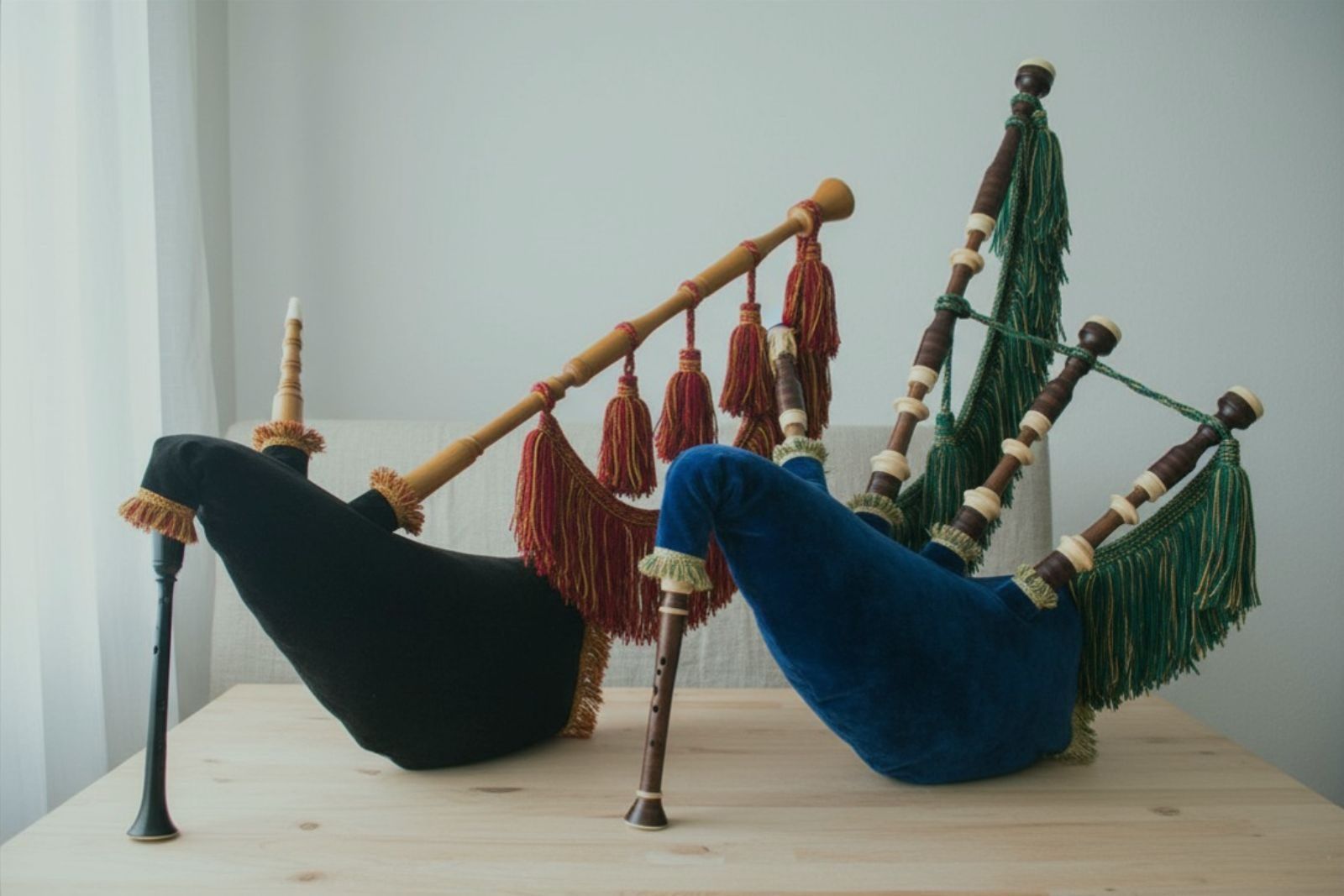
The Asturian gaita and the Galician gaita are two distinct bagpipes, related within the same European family of bag-and-pipe instruments, that differ above all in their usual tuning, repertoire and playing technique. They are not the same instrument under two names, and they are not rivals either: they are two sister traditions, each with its own character.
People ask me this often, and almost always from one of two clichés: either “it’s all the same” or “mine is better than yours”. Neither helps. Let me tell you the real differences.
What they share
Before separating them, it is worth acknowledging the kinship. Both are gaitas de fol: they have a blowpipe, a bag, a punteru (chanter) and, depending on the model, one or several drones. Both produce a melody over a continuous drone, and both draw on the traditions of the north-western Iberian Peninsula, with pieces of a common root, such as the muiñeira.
That is why they get confused outside Asturies and Galicia. The kinship is real. What happens is that the familiarity ends there.
The differences
Tuning
This is the most concrete difference. The traditional Asturian gaita is tuned in several keys, with B flat, C and D the most widespread. The Galician gaita has its own set of usual tunings. The result is that two gaitas from the two traditions, set to play together, don’t necessarily match: the tuning conditions timbre, repertoire and who each one plays with.
Repertoire
Each one carries its own songbook. In the Asturian gaita the weight lies in alboradas, processional marches, xirandillas and a ceremonial and festive repertoire that belongs to Asturies. The Galician gaita has its own corpus, also very rich, with its own forms and pieces. There are overlaps —the muiñeira is the clear example—, but the bulk of the repertoire identifies each instrument with its own land. The Galician gaita and the Asturian one each carry their own world of pieces.
Technique and fingering
This is the difference most noticed by anyone who plays. The way of articulating, the ornaments, the fingering on the punteru and the manner of “saying” a melody are not the same. A piper trained in one tradition does not automatically play the other well: they have to learn its grammar. The interpretive gesture is different even though the instrument looks alike.
Sound
Add it all up —tuning, repertoire, technique— and you get two recognisable sounds. For a trained ear, telling an Asturian gaita from a Galician one is immediate. For an untrained ear, it is a matter of comparing two pieces back to back and listening to the colour of each.
In a table
| Asturian gaita | Galician gaita | |
|---|---|---|
| Family | European gaita de fol | European gaita de fol |
| Usual tunings | B flat, C, D | Its own set of tunings |
| Core repertoire | Alboradas, marches, xirandillas | Its own Galician songbook |
| Shared piece | Muiñeira | Muiñeira |
| Technique | Its own fingering and ornaments | Its own fingering and ornaments |
The honest conclusion
That they look alike does not make them the same, and that they are different does not make them rivals. The Asturian gaita and the Galician gaita are two living forms of one and the same idea —a melody over a drone, fed by a bag— that each land has resolved in its own way. Knowing both takes nothing from either: it helps you hear better what each one does well. And I call neither of them bagpipe or cornemuse abroad: each is its own gaita, as I explain in gaita, bagpipe, cornemuse: what to call it in each language.
Frequently asked questions
-
How do the tunings of the Asturian and Galician gaitas differ?
The Asturian gaita and the Galician gaita actually share the same standard tunings: B-flat, C, and D. The real difference isn’t in the tuning catalogue but in how each tradition got there: B-flat was historically the oldest traditional tuning for the Galician gaita, and C and D were consolidated later as the instrument became standardized over the 20th century.
Sharing tunings doesn’t mean two gaitas from different traditions automatically blend when played together: repertoire and technique still shape tone and who the instrument plays naturally alongside.
I lay out all the differences in Asturian gaita vs. Galician gaita.
-
Can an Asturian gaitero play the Galician gaita without relearning?
Not directly. The way you articulate, the ornaments, the fingering on the punteru, and the way you “say” a melody are not the same across the two traditions.
An Asturian-trained gaitero has a useful base — you know the bag instrument, the continuous drone, the fol — but you still need to learn the Galician gaita’s interpretive grammar to sound right on it. Showing up with Asturian technique and playing Galician repertoire will sound off to anyone who knows it.
The instrument looks similar. The style is another thing entirely.
I go into the technical differences in Asturian gaita vs. Galician gaita.
-
Are the Asturian gaita and the Galician gaita the same instrument?
No. They are related instruments within the same European bag-drone family, but different in standard tuning, repertoire, and interpretive technique.
The confusion comes from outside both regions, where the kinship is visible but the differences aren’t audible. Within Asturias and Galicia, no one mixes them up: each has its own sound, its own songbook, and its own way of articulating melodies.
The same instrument? No. The same family? Yes. And the distinction matters.
I go through all the differences in Asturian gaita vs. Galician gaita.