Guide · Traditional Music
Tuning the Asturian gaita: C, B flat, D and how to choose
The tunings of the Asturian gaita (C, B flat, D and others), what each one means, why there are several and how to choose yours according to what you plan to play.
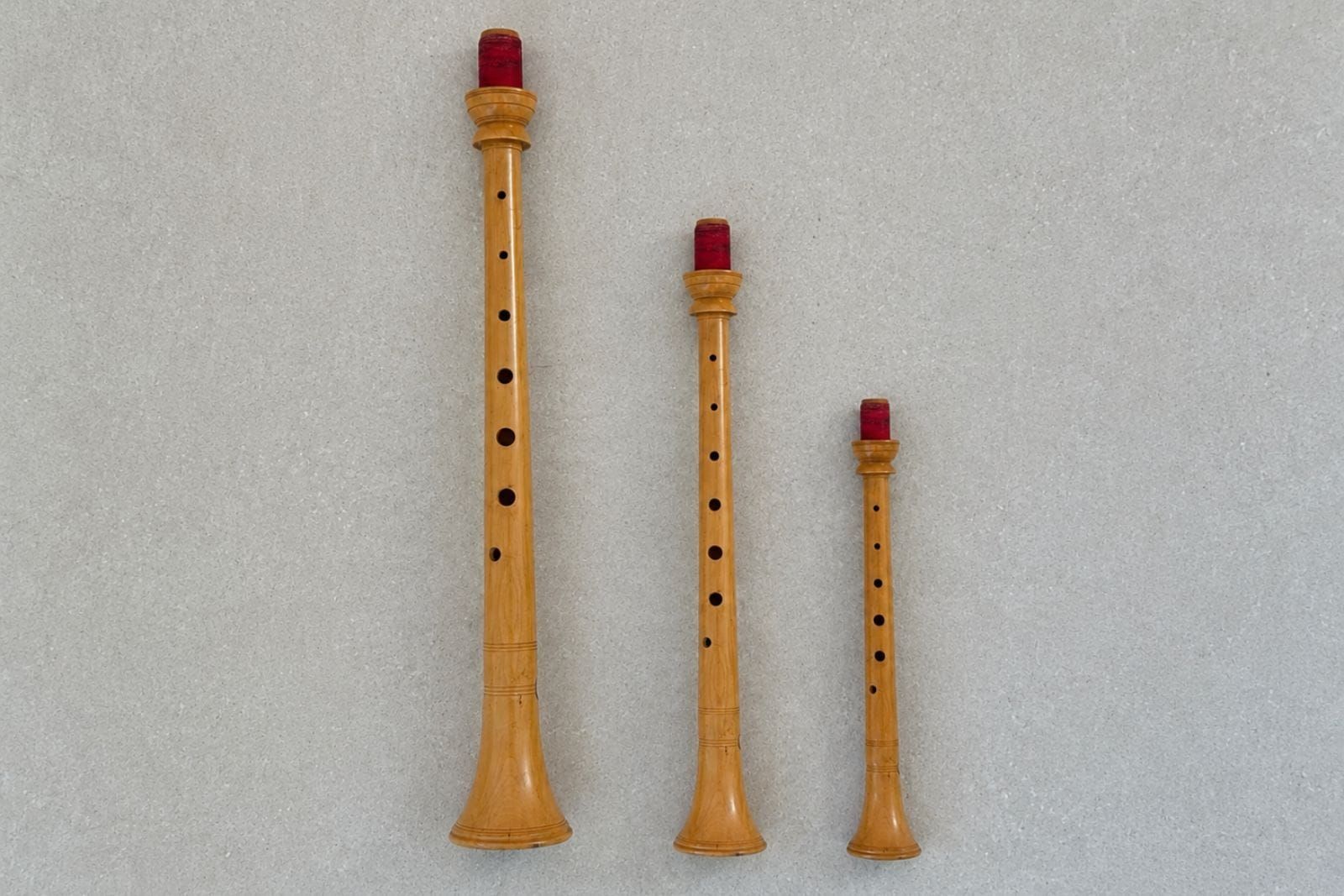
There is no single Asturian gaita: there are gaitas tuned in different keys, and the one you pick changes the timbre of the instrument and the repertoire you’ll be able to play comfortably. The most widespread tunings today are C, B flat and D. Here I’ll explain what each one means and how to choose, without going overboard on the technical detail.
If you’re still not clear on what parts the instrument is made of, start with what is the Asturian gaita and come back here: tuning makes more sense once you already know what the punteru is.
What “tuning” means on a gaita
The tuning of a gaita is the base key given by its punteru, the melodic pipe. When a gaita is said to be “in C”, it means its fundamental note is a C, and that the scale you draw by covering and uncovering the holes is built from there.
Unlike an instrument with variable tuning, a gaita is built in a fixed key: the length of the pipe and the position of the holes determine it. You don’t raise or lower the pitch at will. That’s why a gaitero who wants to play in several keys usually owns more than one gaita.
Why there are several tunings
It isn’t whim or disorder: it’s history and function.
- Tradition and region. Different workshops and different districts settled on different keys over time. The variety is part of the instrument’s landscape.
- Who you play with. A gaita has to pair with the voices or instruments accompanying it. The key decides whether it fits a choir, a band or another gaita.
- Timbre. For the same piece, a low gaita sounds darker and rounder; a higher one, brighter and more piercing. The key is also a decision about colour.
The most common tunings
| Tuning | Colour of the sound | Typical use | For whom |
|---|---|---|---|
| C | “Centred” (C major), neither low nor high | The usual sonority in Asturies; voices and band | Beginners |
| B flat | Low, dark and warm | Religious ceremonies; Scottish pipe bands and Breton bagadoù | Restraint and the Atlantic arc |
| D | Higher and brighter | Stage shows; Irish sonorities | Professional gaiteros |
Gaita in C
This is the gaita to begin with and the sonority we’re used to in Asturies. Musically it’s often said to be “centred”, because it uses the key of C major: neither too low nor too high, a clear reference for the ear. It pairs well with voices and with much of the band repertoire. If you’re unsure where to start, C is the safe choice.
Gaita in B flat
Lower than the C, with a darker, warmer colour. In Asturies it’s used above all for religious ceremonies, where it lends restraint. Beyond here it’s the reference key of the Atlantic arc: the one tuned by Scottish pipe bands and Breton bagadoù. It has presence without stridency.
Gaita in D
Higher than the C, this is the one you reach for on stage and in live shows: it offers more sonic options on stage and lets you get closer to the Irish sonorities that live in that key. It’s the tuning professional gaiteros tend to choose. In exchange, it’s less versatile for accompanying voices.
How to choose yours
Don’t choose by fashion, choose by use. Ask yourself:
- Who are you going to play with? If you’re going to accompany a choir or other gaiteros, their key rules. An established band or group almost always has a reference tuning.
- What repertoire pulls at you? If it’s ceremonial and accompaniment, a low gaita (B flat) will sound wonderful. If you’re after brightness and live work, look towards the D.
- Is it your first gaita? Then keep it simple: a gaita in C, from a reliable maker, opens almost every door while you learn. You’ll tune your ear towards other keys later on.
Tuning is not the same as being in tune
Beware of a common confusion: one thing is the key the gaita is built in (C, B flat, D) and another is whether that gaita is properly in tune in each session —whether the punteru and the roncón are adjusted to each other and the reeds respond. The latter is done every time you play, by adjusting the reeds. They are two different senses of the same word, and it’s worth not mixing them up.
One last thing
The Asturian gaita has its own family of tunings, distinct from that of its bag-piped relatives. If you’ve come wondering how it differs from its cousin to the west, I tell that story in Asturian gaita vs Galician gaita: tuning is precisely one of the points where they part ways.
The practical rule: the best tuning isn’t the prettiest in the abstract, it’s the one that lets you play what you want to play, with whom you want to play it.
Frequently asked questions
-
What is the difference between a gaita's tuning and it being in tune?
These are two different things that share the same word. The tuning of a gaita is the base key it was built in — C, B-flat, D — and it doesn’t change: it’s determined by the length of the tube and the position of the holes on the punteru. That’s fixed by the craftsman.
Being in tune is a different matter: it means adjusting the reeds and the roncón every time you play so that the punteru and the drone are in sync with each other and with the other musicians. Temperature, humidity, how long the instrument has been warming up — all of it shifts the pitch. A gaita in C can be perfectly in tune or badly out of tune depending on those adjustments, made fresh every session.
I explain both dimensions in The tuning of the Asturian gaita.
-
Is it better to start with a gaita in C or B-flat?
For a beginner, the gaita in C (Do) is the safest choice: it’s the tuning we’re used to in Asturias, it pairs well with voices and most band repertoire, and it opens almost every door while you’re learning.
If you already know who you’ll be playing with and that group tunes to B-flat — then B-flat is the answer. But if you don’t have a specific context yet, start with C.
Choosing the wrong tuning early doesn’t block you forever, but it complicates things unnecessarily. Start with the standard.
I explain all three standard tunings in The tuning of the Asturian gaita.
-
What is the gaita in D used for?
The gaita in D (Re) is the brightest and most cutting of the three standard tunings, and the one that shines most in live performance and on stage. It projects further, cuts through a mix, and carries an energy suited to show contexts.
It also lets you approach Irish sonorities — which live in that key — and opens more options in concert settings. It’s the tuning most professional concert-performing gaiteros choose.
The trade-off: it’s less versatile for accompanying voices or ceremonial repertoire, where C or B-flat tend to sit better. So D is a stage instrument; C and B-flat are more all-purpose.
I compare all three in The tuning of the Asturian gaita.