Guide · Musical Learning
Traditional Asturian repertoire: where to start
Where to start with the traditional Asturian repertoire: what kinds of piece there are, in what order to listen to them, and which to take on first if you play the Asturian gaita.
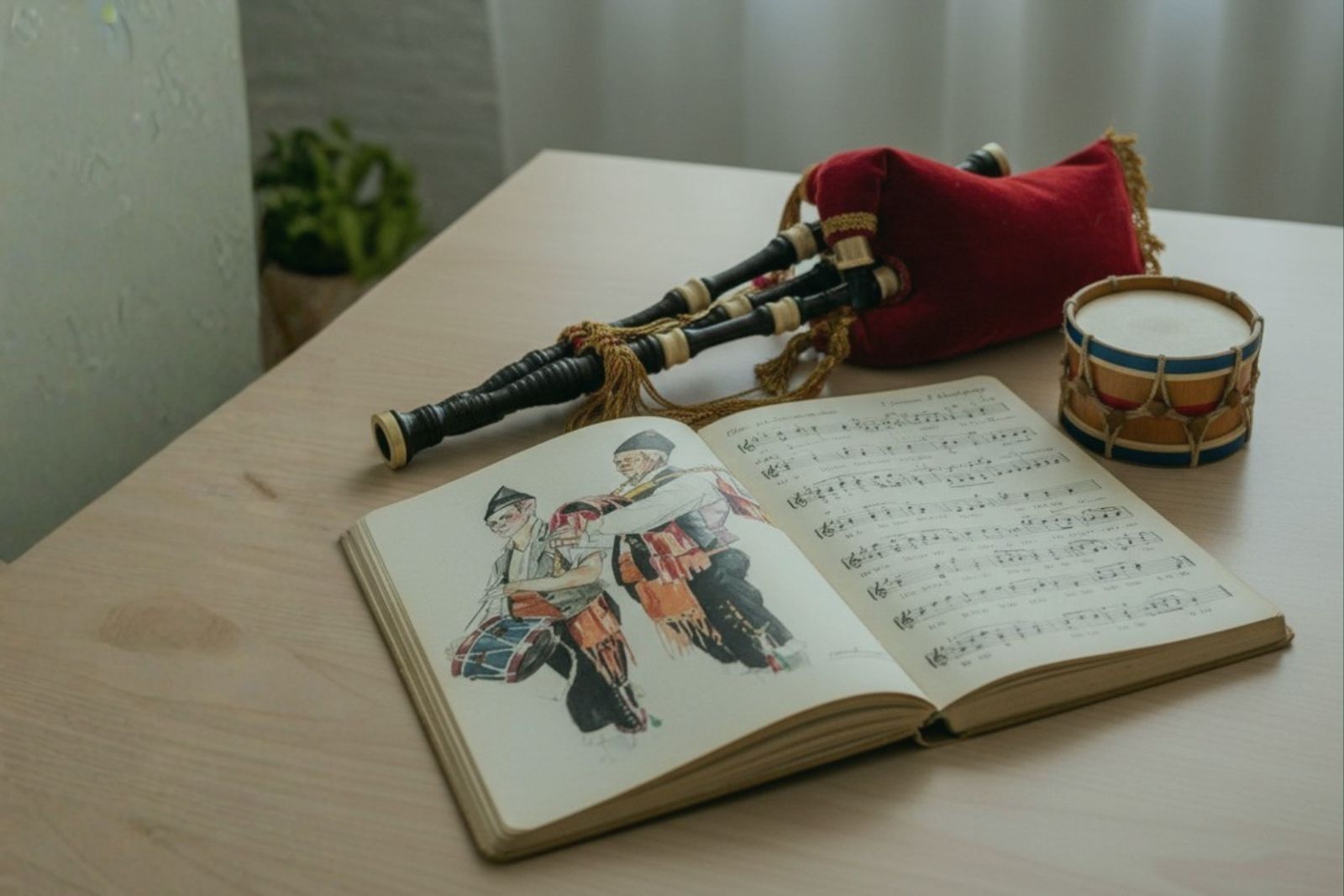
The traditional Asturian repertoire is the body of orally transmitted pieces of Asturies —alboradas, processional marches, xirandillas, muiñeiras and a wide ceremonial and festive songbook— and the best way into it is through its kinds of piece, not through a list of titles. This guide gives you a sensible order to start listening to it and, if you play, to start playing it.
When I teach, this is the first thing I sort out with anyone starting: it isn’t about knowing a thousand pieces, but about understanding the families they’re organised into. With that, everything else falls into place on its own.
Understanding the repertoire by families
Asturian traditional music is not an undistinguished heap of melodies. It has forms, and each form serves a function. Once you recognise them, you stop hearing “gaita music” in general and start hearing specific pieces with their own logic.
Alboradas
Daybreak pieces, tied to the opening of festivities. They tend to be broad melodies, solemn in character and open in feel. They’re a good way in because they teach you the ceremonial side of the instrument without demanding speed.
Processional marches
The ceremonial repertoire par excellence, bound to romerías and solemn occasions. Measured tempo, weight, a clear social function. Listening to them helps you understand that the Asturian gaita was not born for the stage, but to accompany the life of the community.
Xirandillas
This is where dance comes in. Lively pieces, with a marked beat, made to move the feet. If the alboradas and marches are the solemn side, the xirandillas are the festive one. By contrast, they’re the ones that best teach you the rhythmic pulse.
Muiñeiras
A dance with roots shared across the north-west of the peninsula, also present in the Asturian songbook. They have their characteristic metre, and it’s worth treating them with their own grammar, not as just another xirandilla.
Where to start listening
If you only want to listen and understand, this is an order that works:
- An alborada. Tunes the ear to the ceremonial character and to the melody-drone relationship.
- A xirandilla. The contrast in tempo and function fixes the two faces of the repertoire in your mind.
- A processional march. It shows you the social dimension, the repertoire in its context.
- A muiñeira. Once you can tell the previous ones apart, this opens up the kinship with the north-west.
Four pieces, one from each family, and you already have a map. The rest is filling the map in.
Where to start playing
If you play the Asturian gaita or are just beginning, the order changes a little from the listening one, because technical difficulty calls the shots:
- Start with a simple alborada. The unhurried tempo lets you concentrate on the fingering and on keeping the fol steady, which is where every beginner comes undone.
- Follow with an easy xirandilla. It introduces the dance pulse without yet demanding much agility.
- Leave the muiñeiras and the long marches for later. They ask for more breath, more control of ornaments and more memory.
The rule I keep repeating: one piece played well and slowly teaches more than three played halfway and fast. The traditional Asturian repertoire is not a catalogue race. If you’re starting from scratch with the instrument, the basic craft comes before the repertoire: I cover it in how to start playing the Asturian gaita.
One idea to take away
The songbook of Asturies is not a closed archive. It’s still played, recorded and composed from the root, and that’s why entering it isn’t entering a museum: it’s entering a musical language that is still spoken. Start with the families, listen to one piece from each, and let the repertoire ask you for the next one.
Frequently asked questions
-
What is the difference between an alborada and a xirandilla?
These are two distinct forms within the traditional Asturian repertoire.
The alborada is a dawn piece, associated with the opening of festivals: a broad melody, solemn character, unhurried tempo, ceremonial function. It’s the piece that marks a threshold — the start of something.
The xirandilla is a dance piece: lively, strongly rhythmic, built to move feet, with a festive character. Where the alborada speaks, the xirandilla moves.
Neither is better or more representative than the other — they serve different moments. Understanding both is understanding the repertoire. I cover them in context in Traditional Asturian repertoire: where to begin.
-
Is the muiñeira Asturian or Galician?
It’s a musical form shared by the northwest Iberian Peninsula: it appears in both the Asturian and Galician songbooks, with its own variants in each tradition. It doesn’t belong exclusively to either.
In the Asturian gaita repertoire it has its own place, but it’s not the most representative form of the Asturian songbook — that role goes to the alborada and the xirandilla. The muiñeira is part of the repertoire; it’s just not the center of it.
I put it in context alongside the other key forms in Traditional Asturian repertoire: where to begin.