Tutorial · Musical Learning
How to start playing the Asturian gaita from scratch
The real first steps to play the Asturian gaita from scratch: what you need, where to begin, the typical mistakes and what to honestly expect in the first months.
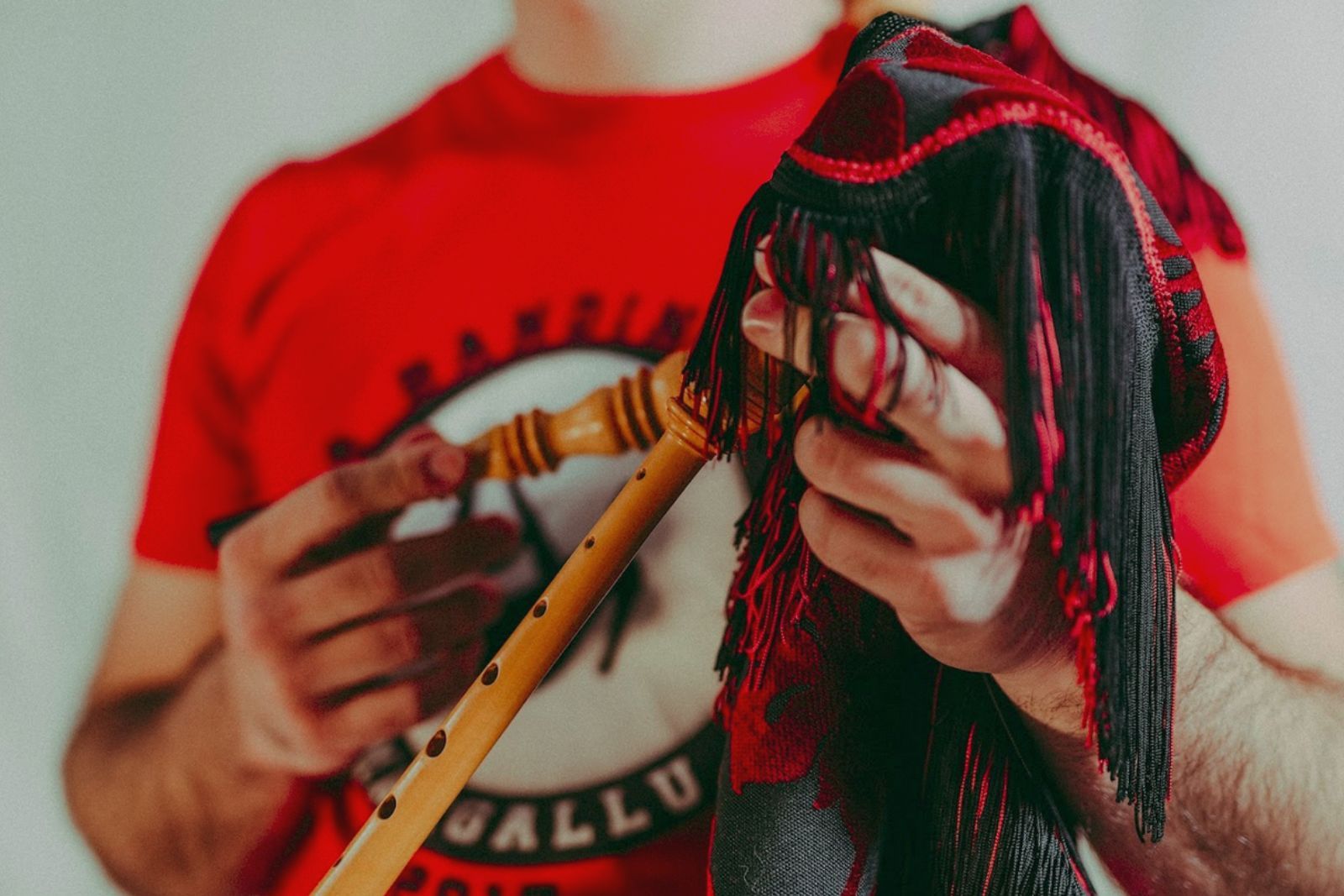
To start playing the Asturian gaita from scratch you don’t need to buy a whole gaita on day one: you need a practice chanter, patience for the fingering and, as soon as possible, someone to correct you. The full instrument comes later. Here is the real order of the first steps, what genuinely takes work and what you can expect over the first months.
I teach it regularly, so this isn’t theory: it’s what I see working and what I see failing. If you still don’t know what it is or which parts the instrument is made of, read what is the Asturian gaita first.
What you need to begin
Not much, and less than people think:
- A practice chanter. It’s the melodic pipe on its own, with its reed, to practise the fingering and the first melodies without dealing with the bag. This is where you start, not with the whole gaita. It can even be a 3D-printed one: that’s exactly what I do with the XIBLA flute of the CHALGA project.
- Consistency over talent. The gaita rewards whoever plays for a while every day, not whoever plays three hours one Sunday a month.
- Reference repertoire. Listen to a lot of traditional repertoire from the start. Your hand learns sooner what your ear already knows.
- A teacher, as soon as you can. The gaita breeds bad posture and fingering habits that are very hard to fix later. One correction in time saves you months. Today there are more formal paths than ever: the current landscape of conservatories, schools and gaita bands.
Where to really begin
The most common mistake is wanting to “blow the gaita” on day one. The sensible path is another:
- Start with the practice chanter. Learn to place your fingers and to draw a clean scale before you play anything that resembles a melody.
- Memorise the fingering until you don’t think about it. The notes have to come out on their own. As long as you have to look at your fingers, you won’t be able to add anything on top.
- Work out your first short pieces. Simple traditional melodies, slow, no rush. Better one piece played clean than five played halfway.
- Only then, the bag. Once the fingering is automatic, you move to the full gaita and learn to keep the bag’s pressure with your arm while you breathe. It’s a new coordination hurdle: be ready for the first notes with the bag to sound worse than the ones you already managed on the chanter. That’s normal.
Typical mistakes when starting out
I run into them again and again:
- Jumping to the full instrument too soon. Without automatic fingering, the bag overwhelms you and everything sounds bad at once.
- Squeezing too hard. Both the fingers on the punteru and the arm on the bag. Tension kills the sound. The gaita asks for firmness, not force.
- Not covering the holes properly. An air leak from a badly placed finger makes the note squeal. At first it’s hard to feel whether the hole is fully sealed.
- Practising without listening. Whoever doesn’t hear traditional repertoire plays “correct notes” with no style. Style is absorbed, not deduced.
- Comparing your month one with a veteran’s live set. Guaranteed discouragement, and completely unfair to yourself.
What to expect in the first months
So your expectations don’t work against you:
- First weeks. You’re on the practice chanter. You get the scale and single notes. It sounds rudimentary, and that’s fine.
- First one or two months. You start stringing together short melodies on the chanter. The fingering begins to loosen up.
- Around three or four months. If you’ve been consistent, the bag arrives. You feel clumsy again for a while: that’s the toll for coordinating hand, arm and breath all at once.
- First year. You play simple traditional pieces from start to finish, with the roncón sounding. It isn’t virtuosity, but it’s already playing the Asturian gaita.
The gaita isn’t an instrument of quick gratification, and that’s exactly why it hooks you: every small advance shows, and it’s earned.
The next step
When you have the practice chanter in hand and want to dive into the fingering —the finger posture, the scale, the first exercises— I break it down step by step in the punteru: first notes. And to fill your ear from the start, look at the traditional repertoire, where to begin.
Start small, start clean and start accompanied. The rest comes from playing. If you prefer proper follow-up from day one, without depending on living near a conservatory, I give individual lessons at EMTI Fervienza.
Bibliography
- Fernández Velasco, Alberto. La gaita asturiana: historia, técnica y repertorio. Caja de Ahorros de Asturias, 1991. The most complete technical description of the instrument and of how it is learned.
- Sloboda, John A. The Musical Mind. Oxford University Press, 1985. On how motor patterns are learned on wind instruments; it applies directly to fingering.
Frequently asked questions
-
How long does it take to learn to play the Asturian gaita?
It depends on consistency, but there’s a typical progression. The first weeks go to fingering practice with a learning flute; after one or two months, short melodies start coming together. Around three or four months in — if the practice has been real — the fol (bellows) comes in. By the end of the first year, with daily practice, you can play simple traditional pieces from start to finish with the roncón sounding.
What slows people down most isn’t the instrument’s difficulty: it’s inconsistent practice. Thirty minutes every day beats two hours on Sundays.
I lay out the full beginner path in How to start playing the Asturian gaita.
-
Do I need a teacher to learn the Asturian gaita?
Not from day one, but as soon as possible. The gaita builds up posture and fingering habits that are very hard to correct once they’re set. Bad habits on the punteru — fingering angles, hand tension, how you hold the instrument — compound over months and become very difficult to undo.
If you start with a learning flute and video resources, you can make real progress on your own for a while. But once the fol comes in, having a teacher who can correct you in person makes the difference between moving forward and getting stuck with patterns you’ll spend a year unlearning.
I walk through how to approach the beginning in How to start playing the Asturian gaita.
-
Why start with a practice flute instead of going straight to the gaita?
Because learning the gaita means mastering two things at once: fingering (fingers on the punteru) and fol control (your arm maintaining constant air pressure in the bag). If you try to learn both from scratch simultaneously, neither comes out right — you end up fighting both fronts without winning either.
Starting with a practice flute — like the XIBLA — lets you master the fingering without the fol. You learn where your fingers go, how to seal the holes, how to move through the scale. Once your fingers know what they’re doing almost automatically, adding the fol is a new coordination challenge — but a manageable one. One thing at a time.
I explain the full learning path in How to start playing the Asturian gaita.