Essay · Musical Learning
CHALGA: 3D lutherie and a printed gaita-learning flute, the XIBLA
What CHALGA was, my 3D lutherie workshop in Teverga, and the XIBLA: a 3D-printed flute with the fingering of the Asturian gaita, to learn without buying a whole gaita. Why I joined gaita and technology.
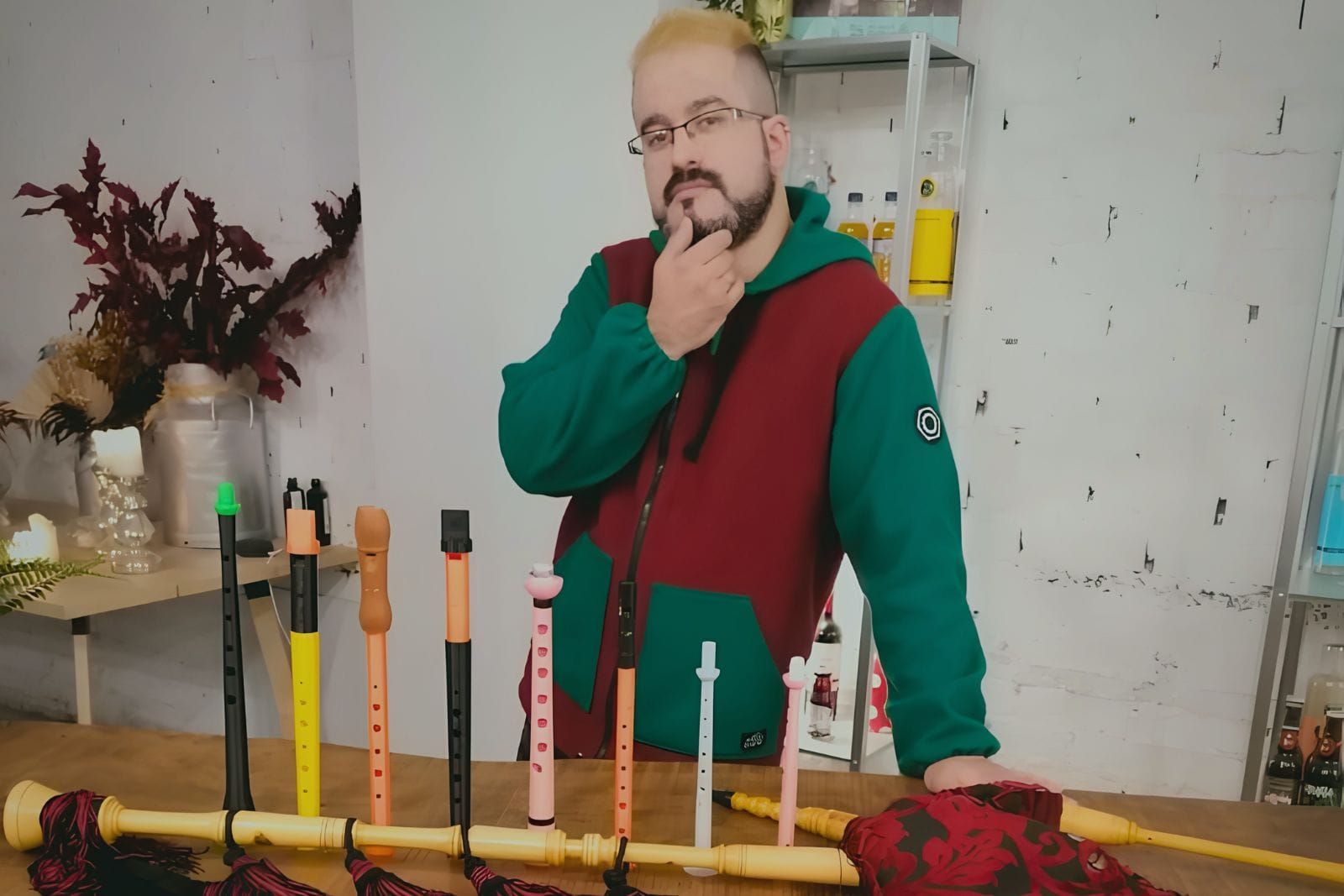
CHALGA was my musical innovation workshop in Teverga, in Asturies, where I made instruments and educational tools through 3D printing. Its flagship product was the XIBLA: a 3D-printed flute that reproduces the fingering of the Asturian gaita and is tuned in C major. It serves to learn how to place the fingers as on the gaita without having to buy a whole gaita first. This is what it was, why I did it and what learning problem the XIBLA solves.
I’m a gaitero and I’m a computing teacher. CHALGA was the place where those two hands worked at the same time, not in turns.
What CHALGA was
CHALGA was a space for creating 3D musical instruments in the service of musical learning. The name comes from the Asturian legend of the chalga: the hidden treasures that, so the story goes, wait in caves and castros. I liked the image, because what I did was exactly that —to unearth something that was already there, the gaita tradition, and put it within reach of the beginner.
The workshop had two legs:
- 3D lutherie. I designed and made instruments and educational tools through 3D printing. The XIBLA was the first.
- Musical projects. Production and software for teaching music, because a tool without a method behind it only gets you halfway.
What the XIBLA is
The XIBLA is a gaita-learning flute made by 3D printing. The idea is simple: the hole layout and the fingering are those of the Asturian gaita, so what you learn on the XIBLA carries over as it is when you move to the full instrument. It’s tuned in C major and I made it in several colours.
| XIBLA | |
|---|---|
| What it is | Learning flute (melodic pipe) |
| Fingering | That of the Asturian gaita |
| Tuning | C major |
| Manufacture | 3D printing |
| Finish | Several colours |
| What it isn’t | A miniature gaita or a toy |
It’s not a toy or a miniature gaita. It’s the melodic pipe, the part you really start with, separated from the bag and the drone so the beginner can focus on one thing only: the fingers.
The problem it solves
When someone wants to learn the Asturian gaita, the first thing that holds them back is money. A gaita is a serious investment, and buying one only to find out three weeks later that the fingering won’t yield to you is a bad deal.
In how to start playing the Asturian gaita I explain that you don’t begin with the whole gaita, but with a learning flute: the melodic pipe alone, to tame the fingering before wrestling with the bag. Well, that learning flute I mention there can be a 3D-printed XIBLA. That’s the exact link: the XIBLA is the tool of the first stage, the one that lets you learn the gaita fingering for a fraction of the cost.
This way the order of learning is respected without a barrier to entry: first the fingering on the XIBLA, and the full gaita when the notes already come out on their own.
Why I joined gaita and 3D printing
I didn’t make the XIBLA to “modernise” the gaita. The Asturian gaita doesn’t need anyone to modernise it. What I did was use a tool from my other trade —design and 3D printing— to solve a concrete problem of my first trade: that starting costs less and holds fewer people back.
For me they aren’t two worlds. Asturian traditional music reached today because each generation absorbed what it had at hand and went on being itself. 3D-printing a flute with gaita fingering is that same gesture, with the tools of now. The blend of gaitero and technologist is the axis of everything I do as Tever, and CHALGA was surely its most literal form.
Where CHALGA comes from
CHALGA was born as a crowdfunding project on Verkami in 2022. It went ahead: funded to 128% with 74 backers who believed in the idea before holding it in their hands. It was active as a workshop until the summer of 2024, when I closed it. I leave the original project on Verkami here as an archive and the origin of all this.
Music came out of that same impulse too. “Suañu de Gaita” is an EP tied to this project; I tell it in «Suañu de Gaita», and the why of composing this way, in writing new music from tradition.
Questions people ask me
What is the XIBLA? A 3D-printed gaita-learning flute, tuned in C major, with the same fingering as the Asturian gaita. It serves to learn how to place the fingers without buying a full gaita yet.
Why a flute and not a gaita directly? Because you start with the fingering, not the bag. The XIBLA isolates that first stage and makes it affordable, which is where a lot of people who would like to start drop off.
Is the CHALGA project still active? No. The Verkami campaign was funded and fulfilled in 2022, and the workshop ran until I closed it in the summer of 2024. Today I speak of CHALGA as what it was: the workshop the XIBLA was born from, not a project in progress.
Frequently asked questions
-
Is the CHALGA project still active?
No. The Verkami campaign was funded at 128% with 74 backers in 2022 and was fully delivered. The CHALGA workshop ran until the summer of 2024, when it closed.
Today CHALGA is the workshop where the XIBLA was born — not an active project. The XIBLA itself remains the practical outcome of that work: a 3D-printed learning flute for the gaita asturiana that came out of those three years of craft and experimentation.
I tell the full story in CHALGA: lutherie, 3D printing and the XIBLA flute.
-
What is the XIBLA?
The XIBLA is a 3D-printed learning flute for the gaita asturiana, created at the CHALGA workshop in Teverga. It reproduces the same fingering as the gaita asturiana’s punteru and is tuned to C major.
It’s designed to let you learn the finger placement without needing to buy a full gaita: the entry barrier drops to a fraction of the cost. That matters — a traditional gaita isn’t cheap, and starting with the wrong technique on the right instrument is worse than starting right on a simpler one.
The XIBLA is not a miniature gaita or a toy. It’s the melodic tube in isolation — the punteru, without the fol or the roncón — which is exactly where learning starts. Once you have the fingering down, adding the fol and the bag is the next step.
I tell the full story of CHALGA and the XIBLA in CHALGA: lutherie, 3D printing and the XIBLA flute.