Tutorial · Musical Learning
The pivot: the exercise my students use to memorise the notes of the Asturian gaita
I came up with this exercise years ago and I use it with all my students, at every level: you fix one note and alternate it with the others. This way you memorise the fingering of each note, learn to narrate the notes in your head while you play them, and gain the independence to play without sheet music.
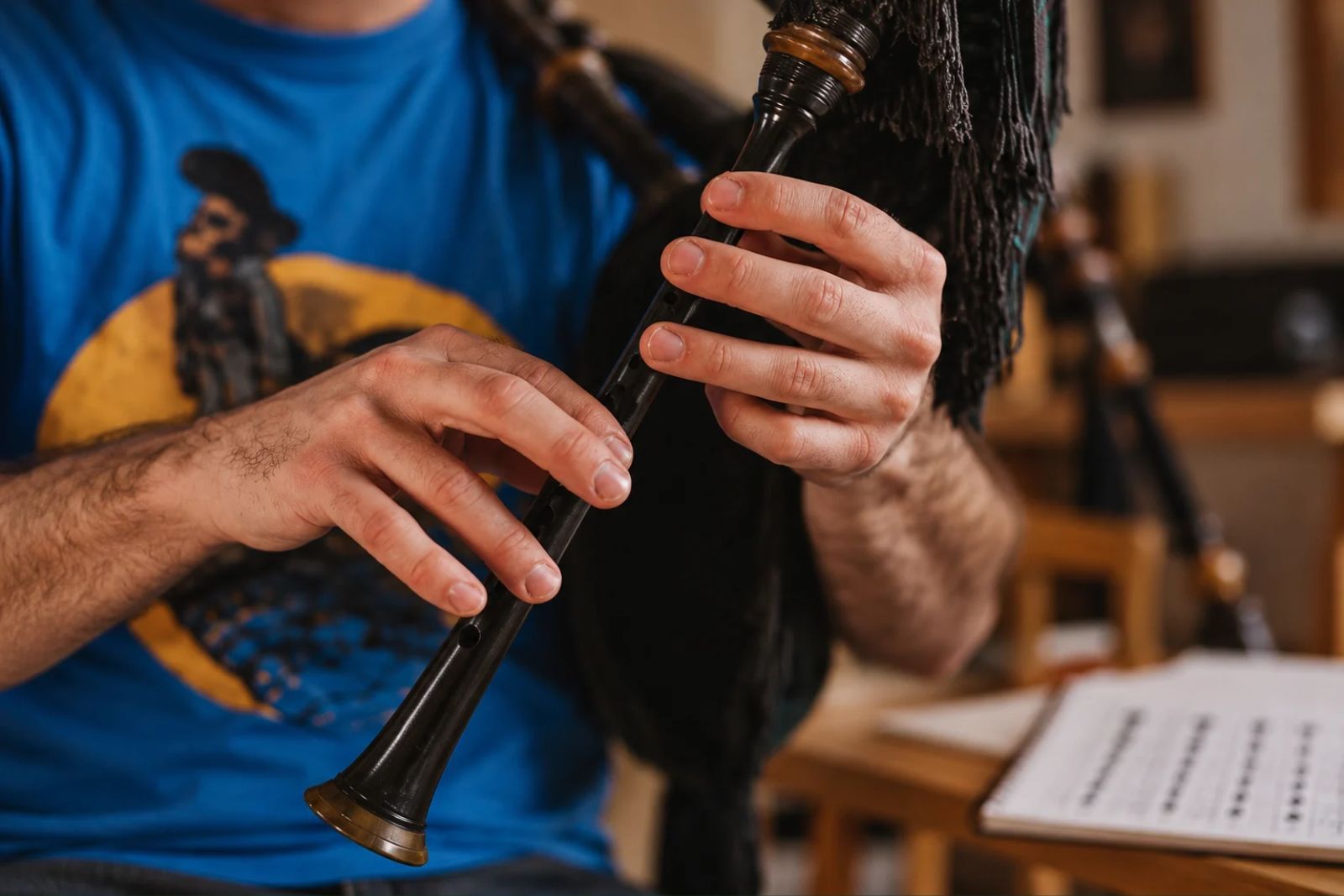
There’s a point in learning the Asturian gaita where the scale already comes out, but every note is still a posture you have to think through: which fingers to cover, which to lift. While you’re thinking that, you can’t think about the music. To solve it I use an exercise I came up with myself, which I call the pivot.
“Pivot”: the name comes from basketball
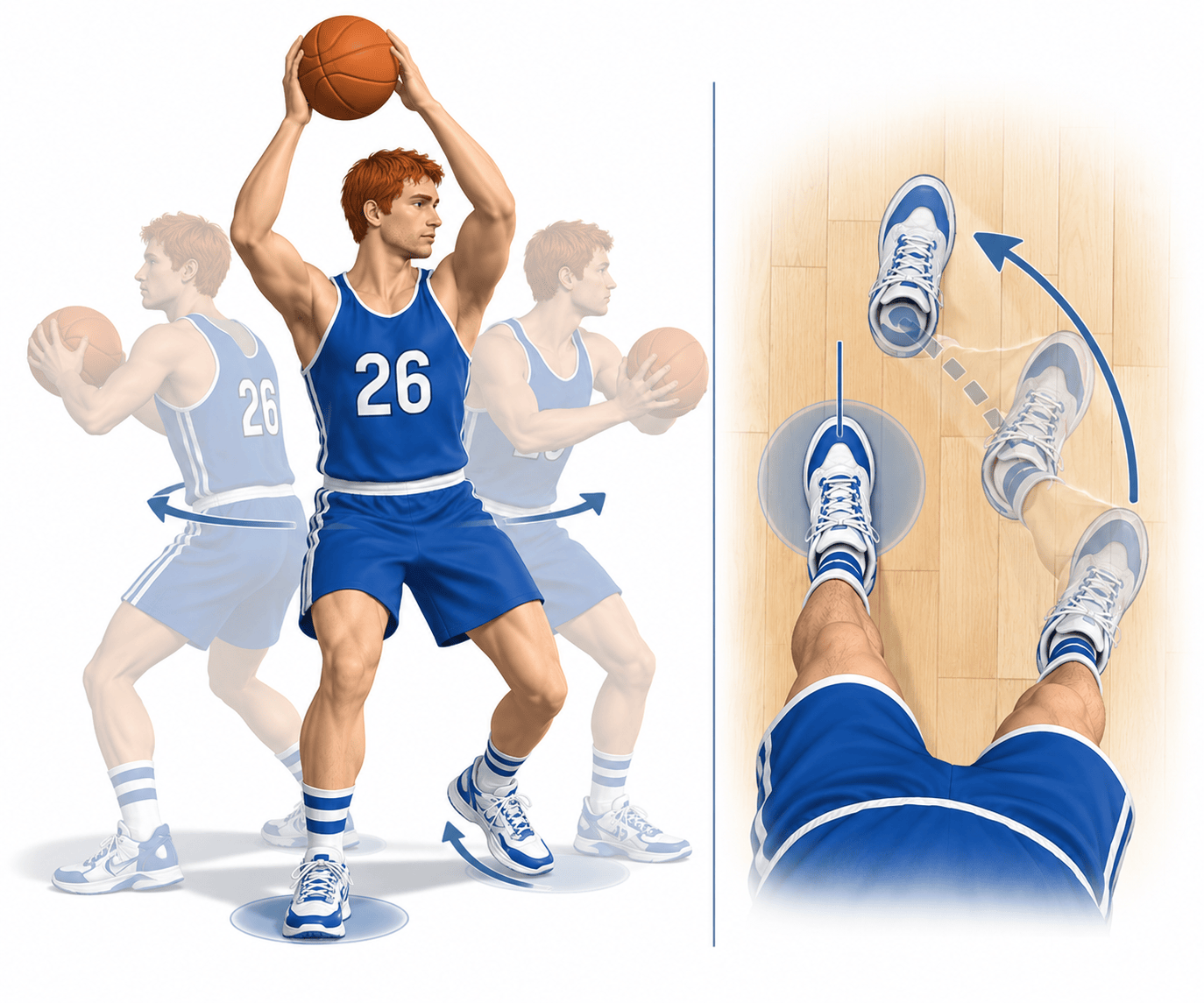
I borrowed it from basketball. When you have the ball and can’t keep moving without taking a step violation, there’s a technique that lets you keep one foot planted and move the other: that’s pivoting. Here I do the same with notes: one note stays fixed —the planted foot— and the other one moves.
How it works
You pick a pivot note and alternate it with each of the others, one at a time, going up and back down until you return to the pivot note.
Let’s put ourselves in the place of a student who’s already learned the first five notes of the punteru of the Asturian gaita with me: C, D, E, F and G. In class we always start with the pivot on C, the first note you learn, but the exercise is the same with any reference note. Let’s look at two examples, with F and with G:
F pivot
G pivot
Same thing with C, with D and with E. Every note has its pivot.
What it’s for
The goal isn’t to sound pretty — it’s to train three things at once:
- Memorising the fingering of each note, until your hand does it on its own.
- Narrating the notes in your head while you play: saying “F, C, F, D…” mentally at the same time as they sound.
- Doing it all without sheet music, because there’s nothing to read: the sequence follows directly from the rule of the exercise itself.
Once you’ve done it with one pivot note, you do it with the next, and each combination is one more posture that settles into your fingers.
At every level
This exercise isn’t just for beginners: we do it at every level and keep reinforcing it all the way through. Every time a student learns a new note, the pivot grows with it —there’s one more combination to practise— so the exercise is never really finished: it expands along with the available repertoire of notes.
The aim is autonomy: playing in a natural way, without having to memorise long passages. If every note is a posture you already have, a melody stops being a list to remember and becomes something you know how to do. It’s the same principle I explained at the start with the punteru: automatic fingering first, everything else comes after.
You don’t need sheet music to be a serious musician
This isn’t a shortcut, or a lesser way of learning. Many professional musicians can’t read sheet music and base their entire musical knowledge on the ear, on technique, and on the direct connection between mind and fingers. Paco de Lucía never learned to read musical notation: he learned the guitar by ear, through family oral tradition, and in 1991 he memorised Rodrigo’s Concierto de Aranjuez by ear to perform it at the Royal Festival Hall in London, precisely because he couldn’t read a score. It’s also common for session musicians who record and back up live performers to work without reading music, and to be brilliant arrangers of the pieces they’re asked to play, by ear, on the spot.
None of this means it’s not important to learn musical language, to read music: it’s part of what we teach at EMTI Fervienza, but it comes once you already have ease on the Asturian gaita, to help you improve your technique and the repertoire you play.
Asturian pipers of the tradition learned the same way: orally, repeating the exercises over and over until the body retained them. The pivot is designed to develop that same musical discourse, the one that links each note to a specific finger posture, so that “singing the melody in your head” and playing it become part of the same process, not two separate steps.
If you want the short definition of the exercise, it’s in this FAQ.
This is the same exercise I first published in my method Gaita asturiana práctica 1, the first book I ever published, where I was already putting this kind of resource in my students’ hands.
Bibliography
- Díaz García, T. Gaita asturiana práctica 1. Self-published by the author — first publication of the pivot exercise.
- Castillo, R. and O’Leary, E. (Reuters/The Philadelphia Inquirer, 27 February 2014). Paco de Lucía, 66, guitar great and flamenco innovator — records that Paco de Lucía memorised Rodrigo’s Concierto de Aranjuez by ear for his 1991 performance at the Royal Festival Hall in London, as he could not read musical notation.
Frequently asked questions
-
What is the pivot in the Asturian gaita?
The pivot is an exercise I came up with, borrowing the name from basketball: just as a basketball pivot means keeping one foot planted and turning around it, here you pick a reference note (the “pivot” note) and play it against each of the other notes of the scale, alternating between them systematically.
The goal isn’t musical in itself: it’s finger independence and the muscle memory of the different postures. The piper shouldn’t have to think which finger goes where — the hand should just do it. You work it note by note: first the pivot on C —C against D, C against E, C against F, and so on to the end— then the pivot on D, on E, and so it generalises across the whole scale.