Tutorial · Musical Learning
How to tune the roncón of the Asturian gaita, step by step
How to tune the roncón of the Asturian gaita step by step: how to slide its pieces to adjust the octave against the punteru, when the reed is the culprit and not the tube, and what to do before every session.
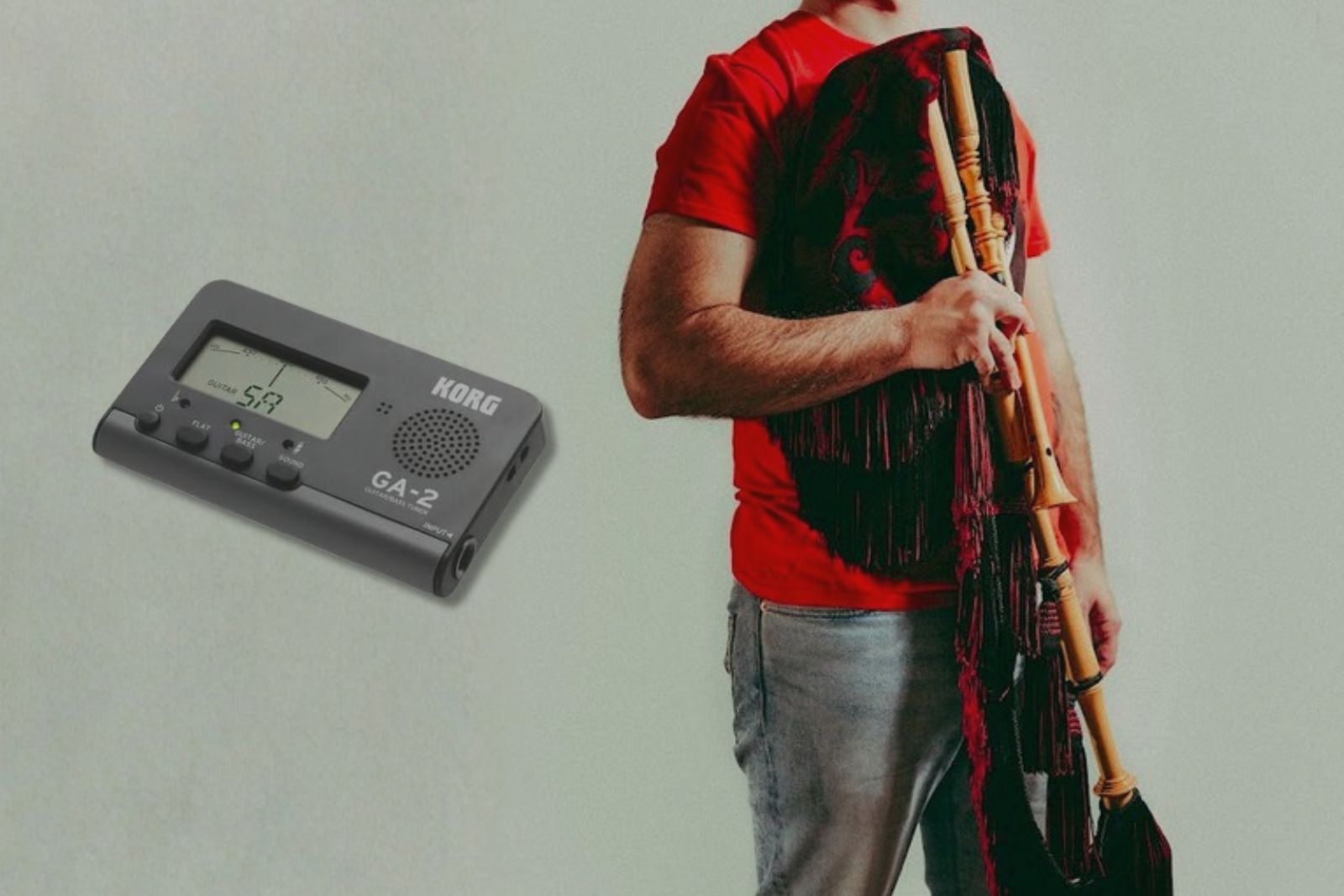
Tuning the roncón isn’t a one-off chore: it’s an adjustment you repeat before playing and, often, during the session itself. Here I walk you through the process step by step, with the reasons behind each step, not just the mechanical motion.
If you’re still not sure which piece is which, start with what is the Asturian gaita; if you want the full context of why the gaita has several possible keys, it’s in tuning the Asturian gaita. This tutorial focuses on a single adjustment: the roncón against the punteru.
What you’re actually tuning
The roncón isn’t a single-piece tube. It’s built from several bodies that fit and slide into one another. When you pull them apart, you lengthen the air column and the note goes down; when you push them together, you shorten it and the note goes up. There are no keys or holes to cover as on the punteru: the whole pitch adjustment happens through that sliding.
The goal is for the roncón to sound in a clean octave below the base note of the punteru. On the Asturian gaita, the specific reference is two octaves below the punteru’s first C: not an approximate note, but that exact interval.
Step by step
- Assemble the roncón with the pieces half-slid. Don’t start from the tube fully closed or fully extended: begin from an intermediate position so you can correct in either direction.
- Play the punteru’s base note and hold it. You need a stable reference —the fundamental note, not a phrase— so you can compare.
- Blow the roncón on its own and listen to the interval. If it sounds sharper than it should, slide the pieces slightly apart to lengthen the tube. If it sounds flatter, push them together.
- Adjust in small steps. The sliding is sensitive: a minimal shift changes the pitch more than it looks at first glance. Correct a little, listen, correct again.
- Check with the punteru and the roncón sounding together. A roncón that sounds in tune on its own may not be once combined with the real punteru. The final test is always together, never separately.
- Repeat the adjustment during the session itself. The reed, the temperature and the humidity shift the tuning while you play. It’s not a fault of yours: it’s the instrument’s normal behaviour, and the reason a gaita player retouches the roncón several times during the same performance.
If you’re starting out, use a tuner
When you’ve only been at it for a short time, tune the roncón with a chromatic tuner, without any shame at all. Training your ear to tune the drone by ear alone takes years, not weeks: it’s a skill built from the accumulated practice of many sessions, not something you can force ahead of time. Using the tuner in the meantime isn’t a crutch you should avoid, it’s the logical step before you have that trained ear.
Other drones don’t tune the same way
Not every drone tube follows the same octave rule. There are other tubes, such as the ronquines, that are tuned differently —at the fifth, for instance, rather than at the octave—. If your gaita carries any additional drone of this kind, don’t mechanically apply the octave adjustment described here: check first what interval that specific tube is meant to sound at.
When the problem isn’t the tube, it’s the reed
If you slide the pieces and the roncón doesn’t respond —it sounds muffled, chokes, or simply doesn’t sound at all— the problem may not be the length of the tube but the roncón reed: the single reed that sets the drone vibrating. Unlike the punteru’s double reed, this one is a single blade of cane, and if it loses response, no amount of sliding is going to fix it. In that case the adjustment isn’t a tuning one: it’s reed maintenance.
A single roncón, not several
It’s worth keeping in mind, while you practice this adjustment, that the traditional Asturian gaita carries a single roncón. The models with two or three drones seen in other bagpipe families come from Scottish influence, not from the historical Asturian construction. If your gaita is traditional, this tutorial covers the complete drone adjustment: there’s no second or third roncón to tune separately.
Once you’ve been playing for a while: the gaita drifts sharp
Over time, the usual behaviour is for the gaita to drift sharp as you play, and you’ll need to correct the roncón mid-session to compensate. It’s not a fault of the instrument or of yours: it’s the expected behaviour of a reed-and-wood instrument in continuous use. This effect is more pronounced with heat —in summer you need to pay especially close attention, checking the drone more often than you would in a winter session.
The practical rule
Don’t look for a “perfect” position for the pieces and consider it settled forever. The roncón is tuned relative to the punteru, at the moment and under the conditions in which you’re about to play. Every session starts with this adjustment, and a long session may call for you to repeat it more than once.
Bibliography
- Fernández Velasco, Alberto. La gaita asturiana: historia, técnica y repertorio. Caja de Ahorros de Asturias, 1991. Internal reference on the construction and adjustment of the roncón.
- Baines, Anthony. Bagpipes. Oxford: Pitt Rivers Museum, 1960. Comparative context on the drone in European bag-and-reed pipes.