Essay · Traditional Music
"Gaita de fol": the etymology of a name
Where «fol» comes from and why «gaita de fole» is, according to philology, the more precise term for a family that «zamorana» or «sanabresa» name only in part. And why in Asturies we say «gaita de fuelle».
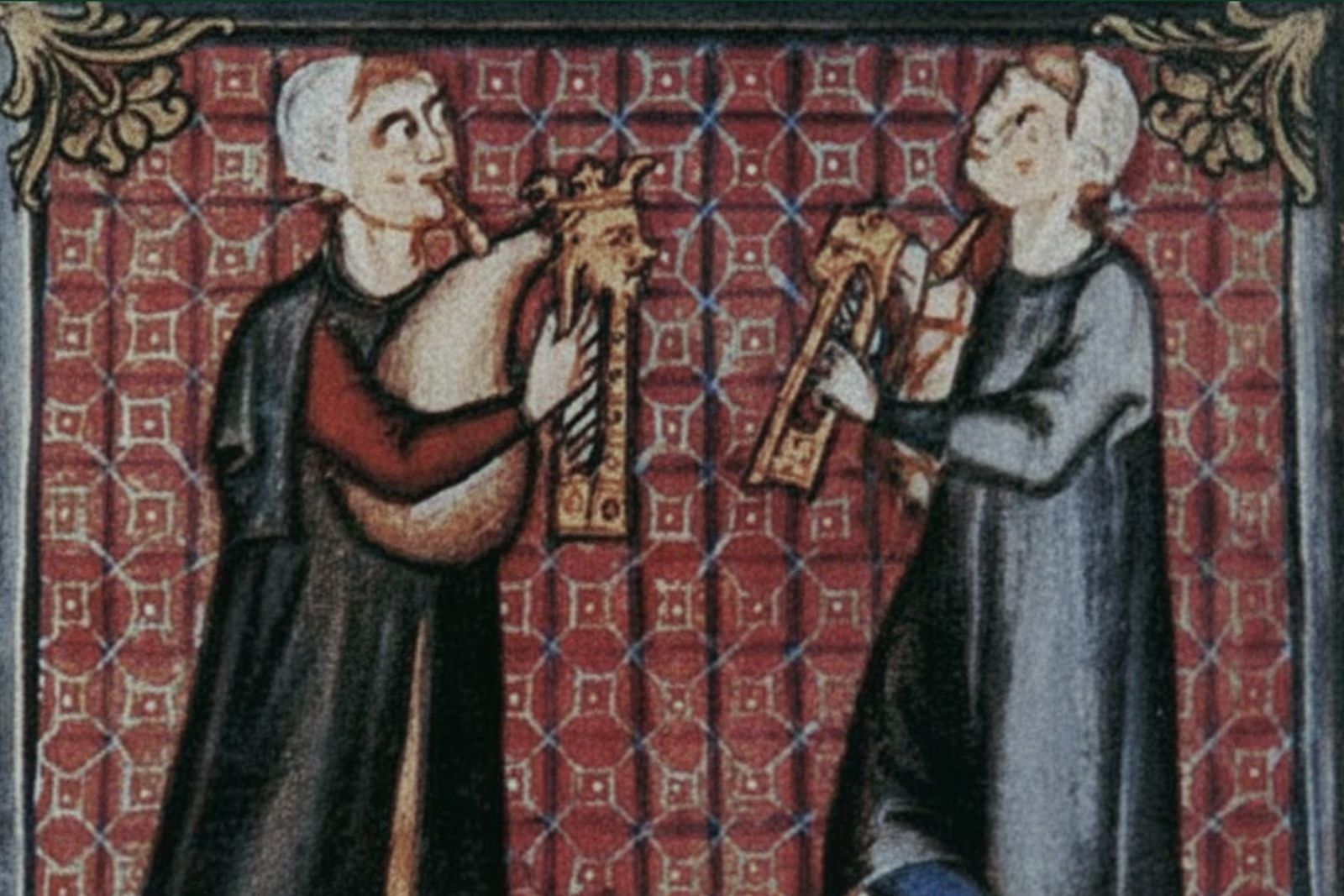
Fole means bellows: the cured goat-hide bag that a piper holds under the arm as an air reservoir. From that word comes gaita de fole —or «de fol»—, the name philology reserves for a specific cross-border bagpipe: that of Sanabria, Aliste and Trás-os-Montes. It is not a pretty name or a folkloric label. It is, according to the scholar who has studied it most closely, the only term that properly names all four variants of that family without reducing it to just one.
Fole, fuelle, odre: the same word
«Fole» is bellows. It is the bag —traditionally cured goat hide, cured to hold air— that the piper inflates and pulls with the arm to keep the bagpipe’s sound continuous. The source for this article, Ángel Vicente Pérez, in «La gaita de fole» (Biblioteca Virtual Miguel de Cervantes), sets this equivalence as a starting point: fole = fuelle = odre (bellows = bellows = hide bag). There are not three concepts, there is one word with two spellings —fol and fole— for the same object.
The word «gaita» itself points the same way. The linguist Joan Coromines proposed that it comes from the Gothic gait or gata —goat— precisely because the bag was traditionally made from the whole, undressed skin of a goat. Fole and gaita, each on its own path, trace back to the same animal.
Where this gaita lives: exact geography
The gaita de fole is not from «Zamora» in general nor «Portugal» in general. It is endemic to a specific strip straddling the two countries:
- Sanabria (Zamora, Spain) — the sanabresa variant.
- Aliste (Zamora, Spain) — the alistana variant.
- Trás-os-Montes (Portugal) — the transmontana or braganzana variant.
- Miranda do Douro (Portugal) — the mirandesa variant.
Four regional names for four local shapes of the same bagpipe. And that is exactly the problem Pérez points out.
The precision argument: why «de fole» and not «zamorana»
I find this argument convincing because the same thing happens with my own gaita: calling it «Asturian» says where it is from, not how it is made. Pérez argues that calling this instrument «gaita zamorana», «gaita sanabresa» or «gaita alistana» is imprecise: each of those names correctly describes a single variant and says little or nothing about the other three. «Sanabresa» does not cover the mirandesa; «alistana» leaves out the transmontana. They are names of a part used as if they were the name of the whole.
«Gaita de fole» does not have that problem: it describes the trait the four variants share —the cured-hide bellows— without favouring any one local area over the rest. It is, in the author’s argument, the term that actually works as an umbrella: it covers the sanabresa, the alistana, the braganzana and the mirandesa alike, because it names what they have in common rather than where each one is played.
Pérez backs this historical continuity with iconographic evidence: the gaita de fole appears represented in the Cantigas of Alfonso X, in the portico of the Colegiata de Toro (13th century) and in the choir stalls of the Catedral de Zamora. This is not an instrument reconstructed without memory: it has a medieval documentary trail.
This naming debate is not merely theoretical: across the border it has already been settled officially. In 2007, the Portuguese Ministry of Culture recognised «gaita mirandesa» as the correct term, ruling out «gaita transmontana» as imprecise —the same kind of argument Pérez makes, this time with institutional backing.
The parallel with «gaita de fuelle»
In Asturies we do not say «gaita de fol»: we say gaita de fuelle. It is the same concept —fuelle is fole is odre— with a different spelling and a different language. The Asturian gaita and the Galician gaita share with the gaita de fole that same trunk: a double-reed bagpipe with a hide bellows, within the Iberian branch of the Atlantic arc. What changes between «fuelle» and «fole» is not the instrument or the concept: it is the language that names it.
That is why it matters not to confuse the two uses: «gaita de fuelle» is the Asturian term for the whole family as seen from Asturies; «gaita de fol» or «de fole» is, more strictly, the name of the Zamora-Portuguese variant —and, according to Pérez, the correct term for that variant against the local names that only cover one part of it.
Bibliography
- Pérez, Ángel Vicente. «La gaita de fole». Biblioteca Virtual Miguel de Cervantes. cervantesvirtual.com/obra-visor/la-gaita-de-fole
- Moreno Fernández, Susana. «Gaitas-de-fole in Portugal and their connection to Galicia». The Chanter, The Bagpipe Society, 2017. bagpipesociety.org.uk
- «Gaita transmontana». Wikipedia. Records the 2007 official adoption of «gaita mirandesa» by the Portuguese Ministry of Culture and the etymology of «gaita» proposed by Joan Coromines. en.wikipedia.org/wiki/Gaita_transmontana
Frequently asked questions
-
Is «gaita de fol» the same as «gaita de fuelle»?
They are the same concept —fuelle=fole=odre— with a different spelling and language. «Gaita de fuelle» is how the whole family is named in Asturies; «gaita de fol/fole» names, more precisely, the variant of Sanabria, Aliste and Trás-os-Montes.
-
Is the gaita sanabresa still played today?
Yes, though not on a large scale. It is one of the four variants of the gaita de fole, and today it is undergoing a recovery in Sanabria: it is played at traditional festivals and processions, at piper gatherings and in teaching within folklore schools that keep and renew its repertoire.
-
What does «fole» mean?
Bellows: the cured-hide bag —traditionally goat hide— that the piper inflates and pulls with the arm to keep the sound going without cuts.